REVIEW · SHANGHAI
Private 2-Hour Walking Tour of Shanghai’s Jewish Ghetto
Book on Viator →Operated by Shanghai Pathways · Bookable on Viator
Jewish Shanghai has a street-level side. This private 2-hour walk in Hongkou pairs the Jewish Refugees Museum with a guided route past places like the Joint Distribution Committee and Huoshan Park. I love that you get a private guide with time for questions, and that the walk includes day-to-day neighborhood scenes. One consideration: the route also spends meaningful time at Xiahai Temple, so if you want only Jewish sites, the mix may feel less focused.
You start at Changyang Road near public transit and end back there, which keeps logistics simple. Expect real walking and city sidewalks, and a pace that’s tight enough to feel like you’re moving from place to place rather than lingering. The payoff is seeing how the Jewish quarter sits inside a living Hongkou District. And yes, the mood shift at Xiahai Temple can be surprising if you’re expecting a straight Jewish-history tour only.
In This Review
- Key highlights at a glance
- Why this Hongkou walk works better than a museum day
- The Jewish Refugees Museum and Ohel Moishe Synagogue site: what you’ll actually take away
- Huoshan Park and the Joint Distribution Committee: the human logistics of help
- Hongkou street-level time: daily life in the former ghetto area
- Xiahai Temple in the Jewish quarter: why a Buddhist temple stop can matter
- Guide quality is the real variable in this experience
- Price and time: is $131.28 per person worth it for you?
- Practical tips for the walking route (so you don’t waste the best part)
- Who this tour suits best
- Should you book this private Jewish Ghetto walking tour?
- FAQ
- How long is the private walking tour?
- Is this tour private?
- What stops are included?
- Are admission tickets included?
- What language is the guide?
- Where do we meet, and where does it end?
- Is food or hotel pickup included?
- Is there a refund if plans change?
- Are service animals allowed?
Key highlights at a glance
- Private, 2-hour format: just your party, with a local English-speaking guide guiding the route.
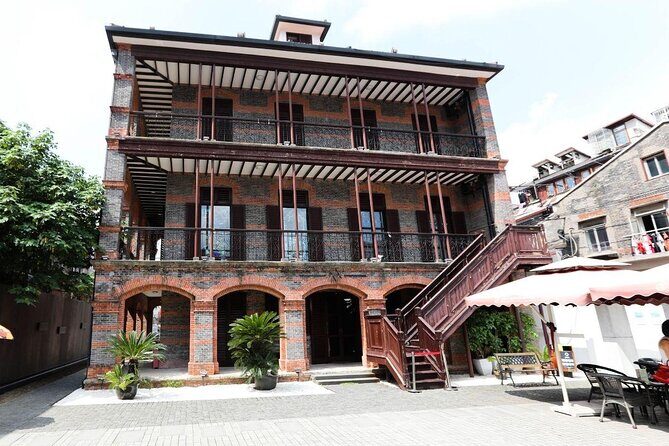
- Jewish Refugees Museum on the synagogue site: the Ohel Moishe Synagogue location is part of the story.
- Memory stops along the way: you pass the Joint Distribution Committee and spend time around Huoshan Park.
- Neighborhood time, not only museum time: you’ll see craft shops, seafood stalls, and everyday streets.
- Xiahai Temple as a “how this fit together” stop: a Buddhist temple inside the historical Jewish quarter.
- Value depends on match: if the temple stop doesn’t interest you, plan to compensate with extra solo time.
Why this Hongkou walk works better than a museum day
Shanghai’s Jewish story is easiest to understand when you’re outside. This tour is built for that. In just two hours, you cover a small slice of Hongkou’s past and present, with stops tied to refugee life, aid networks, and the way different communities overlapped in the same city blocks.
I like tours like this because they don’t treat the past like a separate exhibit. Even when the most important context is inside the Jewish Refugees Museum, you still walk the surrounding streets and parks where people once moved through daily life. You’ll also get local framing for why certain buildings and sites matter, including how aid organizations were connected to refugee arrivals and survival.
Other Jewish Shanghai heritage tours we've reviewed in Shanghai
The Jewish Refugees Museum and Ohel Moishe Synagogue site: what you’ll actually take away
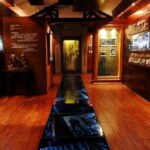
Your first big stop is the Jewish Refugees Museum, built on the site of the Ohel Moishe Synagogue. That matters, because you’re not just learning about Jewish presence in Shanghai; you’re visiting a location that served as a religious and community anchor for refugees during turbulent times.
What to pay attention to:
- How the synagogue site is explained: the museum setup helps connect worship, community, and refuge into one timeline.
- The shift from personal story to public history: this place is designed to show how refugees’ lives became part of Shanghai’s larger story.
- Exhibitions you may want more time for: if you’re a detail person, you might feel the time is short, even though the content is strong.
One smart move: before you go in, ask your guide what theme they think connects the Jewish quarter best—religion, survival, aid, or daily life. When you hear your guide’s angle first, you navigate the museum with clearer eyes.
Huoshan Park and the Joint Distribution Committee: the human logistics of help
After the museum, the route follows the city’s geography and memory. You walk past the American Jewish Joint Distribution Committee area, and you also spend time at Huoshan Park, including moments of reflection tied to Jewish immigrants.
This is where the tour earns its place beyond being a straightforward “museum + temple” combo. Refugee history isn’t only about arrival dates and famous events. It’s also about practical help: organization, supplies, housing support, and the people who tried to keep daily life going.
If you want to get the most from these stops:
- Listen for names and roles, not just dates.
- Ask why certain institutions mattered in Shanghai at that time.
- Notice how the park and memorial space are used for reflection rather than entertainment.
Some guides are especially good at stitching these points into a single narrative you can carry even after you leave the park.
Hongkou street-level time: daily life in the former ghetto area
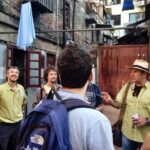
Then comes the part that many first-time visitors miss when they do Shanghai sightseeing by schedule only: the “what it feels like” walking segment. You’ll move through local streets where the historical enclave is now part of everyday life.
This portion typically includes:
- A local neighborhood visit that shows day-to-day routines
- Passing or seeing craft shops, fresh seafood stalls, and rustic restaurants
- A chance to understand how the area functions now, not just how it functioned then
A key value here is perspective. Seeing the neighborhood doesn’t replace the museum; it makes the museum come alive. You start noticing the physical logic—where people would have gone for supplies, where communities could cluster, and how an enclave becomes a neighborhood over time.
One caution: because the tour is only around two hours, this street-level segment can feel like an overview. It’s built to give you direction. If you want to linger in specific alleys or take extra photos, you’ll likely need extra time on your own afterward.
Xiahai Temple in the Jewish quarter: why a Buddhist temple stop can matter
The last major site is Xiahai Temple, known historically as the fish man’s temple. This stop can be fascinating, but it also explains why the tour doesn’t land equally for everyone.
On this route, Xiahai Temple isn’t presented as a random detour. The point is to understand the way a Buddhist temple functioned within a neighborhood that also held Jewish refugees. That overlap gives you a more realistic picture of city life: people didn’t live in separate worlds with clean borders. Shared urban spaces often carried multiple meanings at once.
Still, here’s the drawback: if your priority is Jewish religious sites or Jewish history alone, you may feel the temple takes up too much time. Some people end the tour wishing the final segment had stayed more strictly within Jewish context.
My advice: treat the temple as an interpretation stop. Ask your guide a direct question: what does this temple help explain about refuge life in Hongkou? If you get a clear answer, the visit clicks. If you don’t, you’ll probably feel time pressure.
Other walking tours we've reviewed in Shanghai



Guide quality is the real variable in this experience
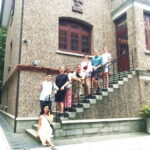
This tour is private and guided, which is exactly why it can be excellent. But two-hour walking tours depend heavily on the guide’s ability to connect dots quickly, especially in a place with layered history.
You may get a guide who brings:
- Strong, clear English explanations
- Personal stories tied to the area
- Confident pacing that keeps you from feeling rushed
In past experiences with this operator, names like Mason/Masin, Annie, Mary, and Zoe have shown up alongside praise for strong communication and making the history feel personal. Some guides also arrange rare moments, like being invited into a local home or room to show real accommodation conditions from wartime memory.
On the flip side, there’s a pattern to watch for: some participants felt the museum portion was strong but self-explanatory, and they wanted more specific ghetto sites or more Jewish-focused stops. Others felt the temple visit was the wrong fit for their day’s goals.
So here’s how you protect yourself:
- If you book, send your questions in advance about your interests (Jewish institutions only, refugee life, aid networks, or daily neighborhood).
- During the first 15 minutes, ask what the guide sees as the main storyline. If you don’t like the framing, the tour can still be worthwhile, but you’ll know early where to adjust your expectations.
Price and time: is $131.28 per person worth it for you?
At $131.28 per person for a roughly 2-hour private walking tour, this isn’t a bargain-basement option. It’s priced for one simple reason: you’re paying for a guide plus the convenience of having admissions included for the museum and the temple.
So the value equation is:
- If you learn a lot from your guide and you enjoy street-level context, this can feel like a fair trade.
- If you mostly want to check off sites quickly or you prefer to read museum labels at your own pace, the guide cost may feel steep.
Admission structure helps your math. The Jewish Refugees Museum is included, and Xiahai Temple is included. Other stops are free, and you’re paying primarily for guided interpretation and route time rather than ticket costs at every single location.
Because this is private, you also have an advantage if your group is small and you like asking questions. That’s where two hours can become worth it fast: you don’t waste time waiting for strangers to catch up.
Practical tips for the walking route (so you don’t waste the best part)
This is a neighborhood walk, so plan like one. Wear shoes you can walk in for two hours without thinking about it.
A few practical points that make a difference:
- Plan for weather: Shanghai weather can change quickly, and this tour is mostly outdoors between stops. Bring something light for rain or sun.
- Use the mobile ticket: the tour notes a mobile ticket, so confirm how you’ll access it on your phone.
- Bring water: food and drinks aren’t included. Even if you don’t want a long break, you’ll be happier with water in your bag.
- Think about how much you want to photograph: some stops are designed for reflection and explanation, not just pictures. Give those moments attention first.
- Start punctual: meet at Changyang Road (Chang Yang Lu) and give yourself a little buffer to find your exact spot. A minor delay can shrink the already-tight two-hour schedule.
Who this tour suits best
This tour fits best if you like history with a physical sense of place. You should book if:
- You want Jewish refugee history in Shanghai, with the museum as a core anchor
- You want context from a guide who can connect sites to refugee life and aid
- You’re curious about how neighborhoods evolve and how different communities shared city space
It’s less ideal if:
- You want a strictly Jewish-only itinerary with no temple detour
- You plan to mostly read museum content on your own and want minimal guiding
- You’re short on time and can’t add a little extra stop time elsewhere
Should you book this private Jewish Ghetto walking tour?
I’d book this if your goal is understanding Jewish refuge history in Shanghai as something that lives in the streets, parks, and buildings of Hongkou today. The museum stop at the Ohel Moishe Synagogue site gives the tour its strongest foundation, and the route around Huoshan Park and aid-related locations adds real human context.
But I’d only book if you’re open to the tour’s mixed structure—Jewish history plus the meaningful but different perspective of Xiahai Temple, plus neighborhood life. If you want a tightly focused Jewish-only day, you might do better pairing the Jewish Refugees Museum with your own follow-up route.
If you do book, send interest details to the operator early and ask your guide to explain why Xiahai Temple belongs in this story. When that connection lands, the whole walk feels more complete.
FAQ
How long is the private walking tour?
It’s approximately 2 hours.
Is this tour private?
Yes. It’s private, and only your group will participate.
What stops are included?
You visit the Shanghai Jewish Refugees Museum at the Ohel Moishe Synagogue site, the Jewish Ghetto area in Hongkou, and Xiahai Temple, with guided walking that also includes places like the Joint Distribution Committee and Huoshan Park.
Are admission tickets included?
Admission is listed as included for the Shanghai Jewish Refugees Museum and for Xiahai Temple. Other listed stops show admission as free.
What language is the guide?
You’ll have a local English-speaking guide.
Where do we meet, and where does it end?
The meeting point is Changyang Road (Chang Yang Lu, Yangpu District, Shanghai). The activity ends back at the meeting point.
Is food or hotel pickup included?
No. Food and drinks are not included, and there is no hotel pickup or drop-off.
Is there a refund if plans change?
Free cancellation is available up to 24 hours in advance for a full refund.
Are service animals allowed?
Yes, service animals are allowed.