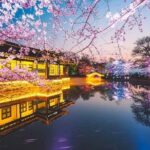
Shanghai can be learned in four sweaty hours. This walk stitches together Shanghai’s major landmarks and daily life stories in a smart, half-day loop that starts at People’s Square and ends near Chenghuang Miao.
I like the way the route covers both sides of the city’s story: the government-and-museums feel of People’s Square, then the shopping, street snacks, and skyline theater of Nanjing Road, the Bund, and Yuyuan Garden. I also love the snack stop idea, because you get a practical taste of local street food without turning the day into a meal marathon.
One thing to plan for: it’s a lot of walking. If the weather is hot and humid, expect to sweat, and wear comfortable shoes and bring water.
In This Review
- Key highlights you’ll actually feel during the walk
- Price and value: the $5 fee isn’t the whole story
- Where the tour starts (and why it matters for your day)
- People’s Square: the civic heart and the museums around it
- People’s Park: green space next to history (and a weekend twist)
- East Nanjing Road: shopping street stories you can repeat later
- Nanjing Road snack break: low-cost local food, guided choices
- The Bund: skyline myths, fast stories, and a classic viewpoint
- Chenghuang Miao (Yuyuan Garden): old-town market life and shopping
- How fast it feels: walking stamina and pacing tips
- What you’re really buying: context, not just photos
- Who should book this Shanghai walking tour
- Should you book it? My practical take
- FAQ
- What does the $5 booking fee cover?
- Is the tour actually free?
- How much tip is suggested?
- How long is the Shanghai city guided walking tour?
- What stops are included on the route?
- Is admission included for the sights?
- Where do I meet the guide?
- How many people are on the tour?
- What happens if the weather is bad or I need to cancel?
Key highlights you’ll actually feel during the walk
- A core central route: People’s Square → People’s Park → Nanjing Road → The Bund → Chenghuang Miao/Yuyuan Garden
- Tips-based model: the $5 fee reserves your spot, and you decide the tip at the end
- Weekend bonus: People’s Park can include the Shanghai Marriage Market
- Street-food break on Nanjing Road: pay for what you order, but you’re guided to good options
- English-speaking guides: guides are described as friendly, funny, and fast-moving
- Small-group feel: up to 30 travelers, with booking capped at groups of 4
Price and value: the $5 fee isn’t the whole story
The headline price looks almost too good: $5 per person. Here’s what that means in real life. That amount is mainly a reservation fee so you can get a spot, while the actual tour operates on a tips-based setup.
The operator suggests a tip of 200–250 RMB (roughly 25–30 USD/EUR) for the guide. That feels fair when you think about what you’re buying: a tight 3.5–4 hour route through key downtown sights, plus an English-speaking guide who’s helping you connect what you’re seeing to how Shanghai works day to day.
You should also budget for yourself at the snack stop. Snacks and drinks are part of the experience, but you pay for what you choose. That’s not a dealbreaker—it’s usually how you get to try things cheaply—but it does mean you’ll want some cash or a phone payment option ready for tipping and for the food.
Other walking tours we've reviewed in Shanghai


Where the tour starts (and why it matters for your day)
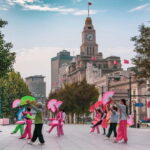
You meet at the Shanghai Urban Planning Exhibition Center, 100 Ren Min Da Dao, People’s Square, Huangpu District. Starting in People’s Square is a smart move because it puts you in the heart of downtown, with easy access to transit and the main “orientation” sights in the same area.
If you’re only in Shanghai for a short time, I like that this route doesn’t waste your morning wandering between far-flung neighborhoods. You’re walking a mostly central loop, and you’ll come away knowing what’s what: museums and civic buildings on one side, then shopping and historic-market life on the other.
Because it ends in a different location, plan to keep your afternoon flexible. You might want to head straight to an attraction nearby, or circle back on your own for lingering photos and shopping.
People’s Square: the civic heart and the museums around it
Your first stop is People’s Square (Renmin Guang Chang). You get about 20 minutes, with a “crash course” style introduction to the area’s history and the stories behind the city’s impressive civic buildings and the museums clustered around the landmark.
This is a good start point if you want context fast. People’s Square is one of those places where everything looks “important,” but without a guide you might miss the why. A guide’s explanations help you understand how the city thinks about power, culture, and public space—before you move on to the streets and the waterfront.
The big plus here is timing. You’re not stuck in one museum line for hours. Instead, you get the big-picture meaning of the area, then you move on while your energy is still fresh.
People’s Park: green space next to history (and a weekend twist)
Next is People’s Park, also around 20 minutes. You’ll be introduced to the park as downtown green space, and you’ll also learn about its location near the historic Race Course Club building.
On weekends, the park can add a very specific cultural moment: the Shanghai Marriage Market. If your schedule allows it, this is one of the most interesting “people watching with meaning” stops on the whole route, because it’s not just a pretty park—it’s a living social ritual that locals recognize.
If you’re traveling on a weekday, don’t worry. You’ll still get the park layout, its role in daily life, and how it fits next to older Shanghai structures. But if your goal is maximum cultural variety, aim for a Saturday or Sunday when you can.
East Nanjing Road: shopping street stories you can repeat later
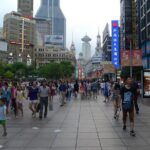
Then it’s Nanjing Lu (Nanjing Road) for another 20 minutes. This is Shanghai’s busiest shopping street, and the guide focuses on more than storefronts. You’ll get explanations of shopping habits and what everyday consumer life can tell you about the city’s changes.
I like this stop because it gives you something you can actually use later in Shanghai. Once you understand how the street is structured and why people shop the way they do, your independent wandering after the tour becomes easier. You won’t feel lost in a sea of signs—you’ll know what you’re looking at.
Quick heads-up: expect foot traffic and visual noise. If you’re the type who likes quiet corners, this is still worth it, but bring patience. The guide keeps the group moving so you spend time learning instead of standing still.
Other guided tours in Shanghai



Nanjing Road snack break: low-cost local food, guided choices
Right after the shopping street walk comes a second Nanjing Road stop—another 20 minutes—built around a snack break. This is where the tour turns practical.
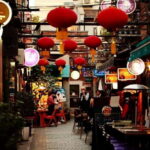
You’re guided to a local food street for street food and refreshing drinks, but you pay for your own selection. The value here is that you get local-style choices without having to guess. Guides also tend to share what to try and what to skip, and that’s often the difference between a fun snack and an expensive detour.
Several guides on this route have been praised for recommending food that visitors genuinely want to return to later. If you pick up a couple of snack ideas here, you can use them as a mini “food map” for the rest of your trip.
The Bund: skyline myths, fast stories, and a classic viewpoint
You then reach The Bund (Wai Tan) for about 30 minutes. This is Shanghai’s most iconic landmark stretch, and the guide focuses on the stories and anecdotes tied to the area’s famous buildings and the skyscrapers around it.
What makes The Bund work inside a walking tour is the mix of architecture and perspective. In a short time, you can see old-world facades, modern skyline energy, and the way the waterfront frames the city’s identity.
One practical consideration: if you’re going in peak heat, this is where you’ll feel it most because you’re outside. Also, if you love nighttime photos, going earlier in the day means you’ll miss the Bund lights. Still, even daytime Bund visits are great for orientation, and a guide’s building stories can make the skyline feel more meaningful.
Chenghuang Miao (Yuyuan Garden): old-town market life and shopping
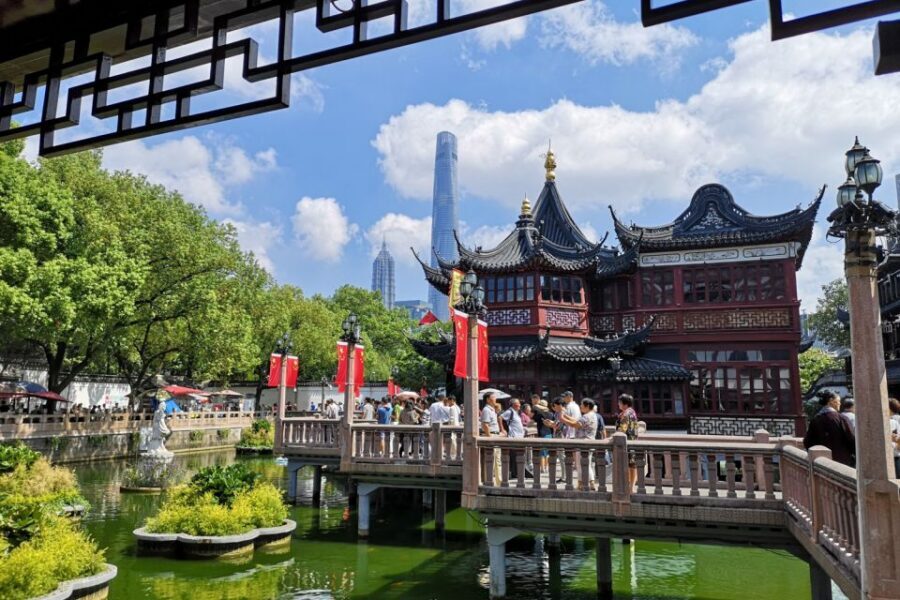
Your final main stop is Chenghuang Miao (Yuyuan Garden), about 20 minutes. The tour frames this area as historic Chinatown territory, with a busy shopping district and a centuries-old feel.
This stop is ideal as a closer because it’s where the tour’s “Shanghai texture” becomes obvious. You get street-level details: the market energy, souvenir and snack options, and the kind of old-town bustle that looks different from the big department-store world of Nanjing Road.
If you want to shop or snack after the tour ends, this is a good place to focus. Even if you don’t buy much, you’ll leave with a clear sense of where to return on your own.
How fast it feels: walking stamina and pacing tips
A lot of the praise you’ll see for this tour points to one thing: it’s not a slow meander. Guides described as super fast mean you should plan for a real walking session, not a gentle stroll.
If you do only one prep thing, do this: wear shoes you can walk in for hours. I’d also bring water, especially in summer. One experience described extreme heat and humidity, and that’s the kind of weather where a “fun half-day walk” becomes a sweaty endurance test fast.
If you can, choose an early start. Reviews praise this as a great first-day orientation. You’ll get more from the stories when you’re fresh, and you’ll have the rest of the day to revisit anything that sparks your curiosity.
What you’re really buying: context, not just photos
This tour is about meaning-making. The route hits big landmarks—People’s Square, the park, Nanjing Road, the Bund, Yuyuan Garden—but the value comes from the guide connecting what you see to how Shanghai evolved and how people live now.
You’ll hear explanations that tie older structures to modern life, and you’ll get a sense for the city’s social rhythm. Even the snack break has a purpose: it’s not random food time, it’s a small window into local street culture.
And because it’s English-speaking and designed for a group format, you also get an easy Q&A outlet. Guides are described as humorous and helpful when you ask questions, which makes the tour feel less like a lecture and more like a fast city lesson you can actually remember.
Who should book this Shanghai walking tour
This tour is a strong fit if you:
- Want a first-day overview of central Shanghai
- Prefer walking with a guide over reading alone
- Like a mix of architecture, street life, and simple food experiences
- Are traveling with a small group (booking capped at groups up to 4 for adults+kids)
It may be less ideal if you:
- Have mobility limits that make 3.5–4 hours of walking hard
- Hate crowds, because you’ll be on busy streets at peak times
- Only want nighttime views, since the route includes the Bund in daytime
Should you book it? My practical take
If your goal is to learn Shanghai quickly and efficiently, I’d book this. The price is low for the reservation fee, and the suggested tip amount still keeps the total spend reasonable compared to most guided city tours. You also get a route that covers “big name Shanghai” without dragging you across the map.
The deciding factor is your comfort level with walking in outdoor heat. If you’re prepared with shoes, water, and the right time of day, this is a smart, high-value way to start your trip.
If you want the best experience, do two things: book it early in your stay, and try to schedule it on a weekend if you care about the People’s Park Marriage Market moment.
FAQ
What does the $5 booking fee cover?
It covers reserving your spot. The tour itself runs on a tips-based model, so you decide what to tip at the end.
Is the tour actually free?
It’s not free in the usual sense. You pay a small booking fee to reserve, and then the guide is compensated through tips.
How much tip is suggested?
The suggestion is 200–250 RMB (about 25–30 USD/EUR).
How long is the Shanghai city guided walking tour?
It runs about 4 hours (approximately 3.5–4 hours).
What stops are included on the route?
The walk includes People’s Square, People’s Park, Nanjing Road, The Bund, and Chenghuang Miao (Yuyuan Garden).
Is admission included for the sights?
Yes—admission is listed as free at the tour’s stops.
Where do I meet the guide?
You meet at Shanghai Urban Planning Exhibition Center, 100 Ren Min Da Dao, People’s Square, Huangpu District, Shanghai, 200003.
How many people are on the tour?
The tour has a maximum of 30 travelers.
What happens if the weather is bad or I need to cancel?
The experience requires good weather. If it’s canceled due to poor weather, you’re offered a different date or a full refund. You can cancel for a full refund if you cancel at least 24 hours before the start time.