Street history feels human here. In a few hours you see how the French Concession grew from clubs and villas into today’s Shanghai streets, with stops that include former social hubs, lane houses, and the path through Tianzifang. I like that it’s English-speaking and practical, and I also like the tip-based format that lets you match your payment to the guide you get.
Two things I really appreciate: the itinerary mixes famous addresses with less-obvious street corners, so you get context without doing a checklist photo walk. And the guide experience is the heart of it—people specifically praise guides like Aubrey and Dinna for explaining Shanghai history, architecture, and the French Concession in a way that sticks.
One consideration: you’re not buying a set-price guided experience. You reserve with a small $5 fee, then you’re expected to tip (the suggested amount is 150–200 RMB, or about 20–25 USD/EUR), so I’d budget for that up front.
In This Review
- Key highlights (what you’ll notice fast)
- A French Concession Walk That’s Really About Storytelling
- Price and What You Should Budget (Reservation Fee Plus Tip)
- Starting at Huaihai Zhonglu: Where to Meet Without Stress
- Former French Concession Stop: Club, Early Streets, and the Little Moscow Area
- Okura Garden Hotel Shanghai: Elegant Past, Real Purpose
- Huaihai Road Commercial Street: Shanghai’s Own Champs-Élysées Energy
- Shikumen Museum: Lane Houses and the Daily-Life Contrast
- Shanghai Culture Square Theatre: From Racing to Arts Hub
- Sinan Mansions: Tree-Lined Villas and Early 20th-Century Prestige
- Tianzifang Finish: Art Studios in Shikumen Streets
- Group Size and the Walking Pace You Can Expect
- Who This Tour Fits Best (And Who Might Want Something Else)
- Tips for Getting the Most Out of Your Guide
- Should You Book This French Concession Walking Tour?
- FAQ
- What is the total duration of the French Concession guided walking tour?
- How much does the tour cost?
- Where do I meet the guide in Shanghai?
- Where does the tour end?
- What time does the tour begin?
- Is the tour guide available in English?
- Are there tickets or admissions for the listed stops?
- Is there a limit to how many people can book together?
Key highlights (what you’ll notice fast)
- Free stops, no ticket hassle at every listed location during the walk
- Tip-based guidance with a clear suggested tip range (150–200 RMB)
- 3 hours, efficient route from the Former French Concession area to Tianzifang
- Former French social life meets everyday shikumen lane-house life
- Small booking groups (up to 4) inside a tour that can run to 30 people
A French Concession Walk That’s Really About Storytelling
This walking tour is built around the idea that the French Concession didn’t become itself overnight. You get a guided path through areas that once connected Europeans and locals through clubs, commerce, villas, and alley life—and you’ll understand why those places look the way they do now.
The pricing model is simple: you pay a $5 reservation fee to hold your spot. The actual guiding is tip-based, and the suggested tip is 150–200 RMB (or roughly 20–25 USD/EUR). In practice, that means the experience cost depends on how much you feel your guide earned—so I treat it like paying for quality, not just buying a product.
What makes this tour feel good is the tone. The guide is local English-speaking, and the experience is described as fun and friendly, with guides praised for handling questions patiently and explaining architecture in a way you can picture while you walk.
Other French Concession walks we've reviewed in Shanghai



Price and What You Should Budget (Reservation Fee Plus Tip)
Let’s do the math in a traveler-friendly way. The booking fee is $5 per person, and you’ll also want cash (or a plan) for the tip. The suggested tip is 150–200 RMB, which is the part that truly turns this into a “real tour” rather than a self-guided stroll.
Why tip-based can be good value: a strong guide doesn’t just point things out. They connect the dots—French Concession street planning, the shift from European-era institutions to today’s neighborhoods, and what features like shikumen architecture meant for daily life. When the guide is doing that work well, the tip is the right mechanism.
One note for planning: your exact guide and the emphasis may vary day to day. That’s normal for a guided, tip-based walk, and it’s one reason I wouldn’t treat the reservation fee as the full cost.
Starting at Huaihai Zhonglu: Where to Meet Without Stress
The tour starts at Huaihai Zhong Lu, 887号边门 (postal code 200041) in Shanghai. It’s near public transportation, and the meeting point is straightforward if you arrive early enough to locate the entrance.
You start at 10:00 am, and the tour runs for about 3 hours. If you like to keep mornings free for coffee and an easy metro ride, this start time works well—it gives you a big chunk of sightseeing before the rest of the day opens up.
The ending point is in Tianzifang: 210弄 Tai Kang Lu near Metro Station Dapuqiao on Line 9. So you finish where you can keep wandering—without having to cram extra transit at the end.
Former French Concession Stop: Club, Early Streets, and the Little Moscow Area
Your first hour is where the tour sets its “how did this place form?” foundation. You’ll visit the Former French Club, see part of the 1st Road in the French Concession, and spend time around the area sometimes referred to as Little Moscow. You’ll also look at a local alleyway residence building, which helps you understand the street-scale difference between formal institutions and everyday housing.
This stop matters because it explains what the French Concession wasn’t: it wasn’t just pretty buildings. It was a network of social and administrative spaces—club life, European-influenced street patterns, and neighborhoods that served different communities with different kinds of buildings.
If you tend to forget the “people” part of history when you travel, this is a good antidote. The guide’s job here is to turn street names into characters, from celebrities to ordinary residents, so the area feels lived-in rather than museum-like.
Okura Garden Hotel Shanghai: Elegant Past, Real Purpose
Next comes a quick stop at the Okura Garden Hotel Shanghai, which connects you to an earlier French Club setting. The time here is short—about 20 minutes—but it’s chosen deliberately to show how elegant spaces had roles in the French Concession’s cultural and social evolution.
Even if you’ve walked past upscale hotels in other cities, this one can feel different once you understand the earlier function of the buildings and the way these spaces shaped community life. The guide focuses on the story behind the setting, so you’ll look at architecture as a clue, not just decoration.
Practical tip: this stop is brief, so if you want to ask questions about a specific building detail, do it during the first few minutes. Guides move you forward for a reason.
Other walking tours we've reviewed in Shanghai
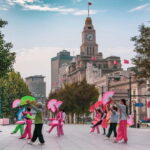



Huaihai Road Commercial Street: Shanghai’s Own Champs-Élysées Energy
You then move to Huaihai Road Commercial Street, described as an Oriental take on the Champs-Élysées idea. You’ll walk for about 20 minutes and get anecdotes that explain why this area became a shopping and social magnet.
This is the part of the tour where you’ll feel the contrast between old and new. The guide’s explanations help you see commercial streets not just as retail corridors, but as places shaped by status, foreign influence, and local adaptation.
If you’re the type who likes to people-watch, this section delivers. Just remember: the tour isn’t trying to compete with an all-day shopping plan. It’s using Huaihai as a story bridge.
Shikumen Museum: Lane Houses and the Daily-Life Contrast
At Shikumen Museum, Shanghai, you get about 20 minutes focused on traditional shikumen lane houses and alleyways. This is one of the best contrasts on the walk: modern Shanghai can look polished and high-speed, but shikumen architecture reminds you that everyday life had its own logic and tight street patterns.
The tour uses this stop to highlight the difference between the glamorous side of the French Concession and the humble realities people lived with behind those walls. Once you understand what a lane house layout does—privacy, shared boundaries, compact living—you start seeing the city’s form as a social system.
If you only have a few hours in Shanghai, I’d consider this stop essential. It turns “architecture photos” into an understanding of how people actually moved, lived, and interacted.
Shanghai Culture Square Theatre: From Racing to Arts Hub
Next you’ll visit the Shanghai Culture Square Theatre area. Here’s the interesting twist: the site is described as once being a canidrome (greyhound racing) and now a arts and culture hub.
The payoff of this stop is the transformation story. You’re watching the city re-use space as tastes and priorities change. The guide’s job is to connect that shift to broader changes in Shanghai over time, so the building’s current role makes more sense.
This is also a good moment to ask questions about what you’re seeing nearby. The structure may be more familiar from the present-day view, but the guide gives you the historical context that turns it into more than a landmark.
Sinan Mansions: Tree-Lined Villas and Early 20th-Century Prestige
Then you walk through Sinan Mansions, a historic enclave of restored early 20th-century villas associated with prominent political and cultural figures. This stop runs around 20 minutes and works well if you like architecture, planning, and neighborhood design.
What I like here is that you can compare it to the lane-house stop. Villas and mansions tell one side of the French Concession story—status, influence, and formal living spaces. Shikumen tells the other—shared walls, compact streets, and everyday life shaped by space limits.
Once you’ve done both, the city’s “mix” stops feeling random. It feels like a planned outcome of different communities and different needs.
Tianzifang Finish: Art Studios in Shikumen Streets
The tour ends in Tianzifang, specifically around Tianzifang 210弄 Tai Kang Lu near Line 9 (Dapuqiao). This area is described as a maze of narrow alleys filled with art studios, boutique shops, and cozy cafés, while still reflecting traditional shikumen architecture.
This finish is a smart choice. You end with something you can keep exploring on your own without needing to plan a second transit step. And because the tour spent the prior hours teaching you what to notice, you’ll walk Tianzifang with better context than if you just arrived cold.
If you want a quick plan after the tour: bring a little cash for snacks and small purchases, and leave time to wander slowly rather than trying to “cover” everything at once.
Group Size and the Walking Pace You Can Expect
This tour caps at 30 travelers. That usually keeps it moving but still offers a chance to ask questions without feeling lost in a huge crowd.
There’s also a booking note that your group is limited to up to 4 people per booking, with an option to contact the operator for larger groups or private arrangements. So if you’re traveling with a bigger circle, plan ahead so you don’t run into scheduling limits.
The total duration is about 3 hours. That’s a good length for this kind of story-heavy walking because it’s long enough for meaningful context but short enough to keep energy up, even if you’re a bit jet-lagged.
Who This Tour Fits Best (And Who Might Want Something Else)
This tour is a strong fit if you want more than photos. You’ll get more value if you enjoy history tied to street-level design—clubs, mansions, lane houses, and how commerce took shape along major corridors.
It’s also a good choice for first-time Shanghai visitors who already know the basics and want a more textured second layer. And it works well if you’re the type who asks questions—guides are praised for being patient and for translating history and architecture into everyday understanding.
If you prefer a highly structured museum experience with exact stop durations and zero walking, you might find a guided walk less your style. This is about walking, talking, and noticing.
Tips for Getting the Most Out of Your Guide
Because the tour is tip-based, I think your best strategy is to be actively engaged, not passive.
- Ask one question early at the Former French Club area so the guide knows what you care about.
- Pay attention to architectural terms the guide uses and connect them to what you see immediately after.
- Bring a small amount of cash for the recommended tip range, so you’re not scrambling later.
Also, the guide experience is a key part of why this tour earns high marks. People specifically highlight guides like Aubrey and Dinna for their knowledge and their ability to interpret French Concession architecture and history in a way that feels clear and practical.
Should You Book This French Concession Walking Tour?
If you like guided context—street history, architecture, and how neighborhoods change over time—this is an easy yes. The 4.9 rating with a very high recommendation rate signals consistent guide quality, and the route covers major “story types” in one 3-hour session, including lane houses and institutional sites.
I’d book it if you:
- want a half-day plan that ends somewhere fun (Tianzifang)
- are comfortable paying a small reservation fee and then tipping your guide
- like walking through neighborhoods where the past still shows up in the streets
I’d skip it if you want a fixed-price, non-tip experience or if you’re not interested in architectural and neighborhood history.
FAQ
What is the total duration of the French Concession guided walking tour?
The tour lasts about 3 hours (approx.).
How much does the tour cost?
The booking fee is $5.00 per person. The tour operates on a tip-based model, with a suggested tip of 150–200 RMB or 20–25 USD/EURO.
Where do I meet the guide in Shanghai?
The start point is Huaihai Zhong Lu, 887号边门, postal code 200041.
Where does the tour end?
The tour ends in the Tianzifang area near Metro Station Dapuqiao on Line 9, at 210弄 Tai Kang Lu.
What time does the tour begin?
The start time is 10:00 am.
Is the tour guide available in English?
Yes. The tour includes a local English-speaking guide.
Are there tickets or admissions for the listed stops?
Admission tickets for the listed stops are described as free.
Is there a limit to how many people can book together?
Booking is limited to groups of up to 4 people, and the tour overall has a maximum of 30 travelers.
You Might Also Enjoy
 Shanghai: Jewish Ghetto and Shanghai Bund Private Tour
 Private Shanghai Pudong Airport Arrival Transfer to Shanghai City Center
 Arrival Transfer by High-Speed Maglev Train: Shanghai Pudong International Airport to Hotel
 Private Qibao Ancient Town Walking Tour with Tea Tasting and Calligraphy Experience