REVIEW · SHANGHAI
Shanghai Uncommon Historic Sites Tour
Book on Viator →Operated by Jennys China Tours · Bookable on Viator
Shanghai has stories hiding in plain sight.
This tour gives you a smart way to connect Shanghai’s past to the city you’re walking through now. I love how the stops mix architectural details (like the Moller Residence in the French Concession) with political landmarks, and I also appreciate the strong guide touch shown by guides such as Peggy, who’s known for excellent English and great photos. The one drawback to plan for is that the day includes serious political sites, so if you want only light sightseeing, this may feel a bit heavy.
What works best is the variety in tone. You’ll move from colonial-era design to a strange reuse of an old slaughterhouse, then to key moments in early 20th-century China, ending with engineering you can spot instantly from the street. I also like that you’re not just looking at one style of place all day.
Logistics are straightforward. It runs about 8 hours starting at 9:00 am, with pickup offered, an air-conditioned vehicle, and a mobile ticket for an easier day on the move. Since it’s private for your group, you can set a pace that matches your interests (within reason).
In This Review
- Key things you’ll notice on this tour
- Why this Shanghai historic sites tour feels different
- Price and what you actually get for $175
- Getting oriented with pickup, A/C comfort, and a private group
- Moller Residence: colonial design with Gothic-Tudor details
- 1933 Old Millfun: turning an eerie slaughterhouse past into shops
- Zhou Enlai’s former residence: a French-style house with political gravity
- Shanghai Ancient City Wall: Ming defenses mapped onto today’s streets
- The site of the Second National Congress (1922): early revolution in Shanghai
- Waibaidu Bridge: 1908 all-steel engineering you can spot fast
- Lunch: an authentic dumpling meal that keeps the day from feeling rushed
- Who this tour suits best
- Should you book this tour?
- FAQ
- How long is the Shanghai Uncommon Historic Sites Tour?
- What time does the tour start?
- How much does the tour cost?
- Is pickup and air-conditioned transportation included?
- Is lunch included?
- Are admission tickets included?
- Is this tour private?
- Can I cancel for a full refund?
Key things you’ll notice on this tour
- A French Concession mansion with Gothic-Tudor character built in 1936 for Eric Moller
- 1933 Old Millfun where an old municipal slaughterhouse became a dense mix of shops and restaurants
- Zhou Enlai’s former residence, a 1920s three-story French-style house tied to a major life story
- Shanghai Ancient City Wall remnants and measurements from the Ming era, tied to today’s Renmin Lu and Zhonghua Lu
- The Second National Congress site (1922), a major early Communist Party event held in Shanghai
- Waibaidu Bridge, the first all-steel bridge in China and the only surviving camelback truss example
Why this Shanghai historic sites tour feels different
Most Shanghai tours lean hard into either modern neighborhoods or postcard-classical landmarks. This one takes a more “how did we get here?” approach. You’ll see Shanghai shaped by outside influences, local defense needs, and political turning points.
That mix is the point. The French Concession stops help explain the city’s colonial-era architecture. Then you pivot into revolutionary history and finish with industrial design, so the day feels like one connected story rather than disconnected photo stops.
Other historical tours in Shanghai
Price and what you actually get for $175
At $175 per person for roughly 8 hours, the value comes from what’s bundled in the day. You get pickup offered and air-conditioned transportation, plus lunch: an authentic dumpling lunch. On top of that, the tour includes all fees and taxes, and several stops have admissions handled or listed as free.
Here’s how I’d think about it as a traveler: if you would normally pay for entry fees, guide time, and a lunch you’d actually enjoy, this price stops feeling “just sightseeing.” It turns into a full guided day with a plan, not a scavenger hunt.
Getting oriented with pickup, A/C comfort, and a private group
This is set up as a private tour for your group, not a large shared bus experience. You’ll start at 9:00 am, and you’ll travel in an air-conditioned vehicle, which matters in Shanghai’s changing weather.
A small practical note: with a mobile ticket, you don’t need to hunt for paper or worry about last-minute printing. And if you’re traveling with a service animal, that’s supported.
Moller Residence: colonial design with Gothic-Tudor details
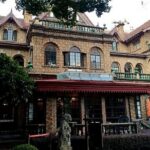
The day begins at Moller Residence, a colonial-era mansion in the French Concession area. It was built in 1936 by Eric Moller, who became wealthy from British shipping, and the design blends brown tiled Gothic and Tudor features.
What I like about this stop is that it’s not just “pretty old building.” It gives you a concrete example of how wealth, foreign trade, and local tastes mixed in Shanghai’s past. If you care about architecture, you’ll likely enjoy noticing how the building’s materials and styling signal the era.
Time on site is about 1 hour, so you’ll have enough time to look closely without feeling rushed.
1933 Old Millfun: turning an eerie slaughterhouse past into shops
Next you’ll head to 1933 Old Millfun, a complex of restaurants and shops that used to be the Shanghai Municipal Council Slaughterhouse. It’s described as an eerie kind of place, and the key value here is contrast: a heavy, grim original purpose turned into a lively commercial area.
This stop tends to be memorable because it forces you to confront the city’s practical history, not only its glamorous side. You also get a reminder that Shanghai’s built environment keeps changing roles. That makes the surrounding streets feel more meaningful once you connect the past to the present.
You’ll spend about 1 hour, and admission is listed as free for this stop.



Zhou Enlai’s former residence: a French-style house with political gravity
Then the tour moves into one of the most historically important personal stories in modern Chinese history: Zhou Enlai (1898?1976). He was the first Premier of the People’s Republic of China from 1949 until his death.
His three-story French style house, built in the 1920s, is where this stop centers. In other words, you’re not only looking at architecture; you’re looking at a specific setting tied to a major figure.
A full hour gives you time to slow down and absorb the scale and feel of the residence, which helps this feel less like a checklist item and more like a place with weight. Admission is listed as free here as well.
Shanghai Ancient City Wall: Ming defenses mapped onto today’s streets
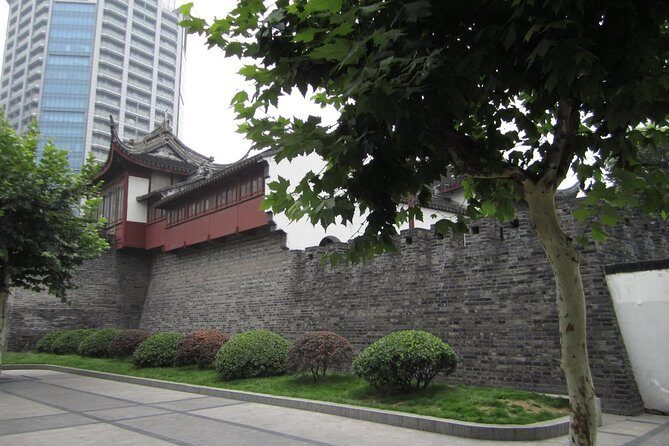
If you love “where exactly is that?” history, don’t skip this part. The Shanghai Ancient City Wall dates to 1553 during the Ming Dynasty, built to defend the city against Japanese pirates.
A few details make it concrete: the wall followed today’s Renmin Lu and Zhonghua Lu, and it measured about 8.1 meters high (27 ft) and 4.8 km long (3 mi). You’ll spend about 30 minutes, with admission included for this stop.
The value here is in the street connection. You can look at modern Shanghai and still understand the defensive logic of the past. It’s also a quick win if you’re trying to mix outdoor walking with a guided pace.
The site of the Second National Congress (1922): early revolution in Shanghai
Next is the Site of the Second National Congress of the Communist Party of China, held in Shanghai between 16–23 July 1922. This congress mattered because it led to key confirmations inside the early party structure.
Time here is about 1 hour, and admission is included. This is one of those stops where your guide really shapes the experience. If you’re interested in how early Communist Party decisions formed later outcomes, this gives you a focused, place-based way to understand it.
If you prefer lighter storytelling, you might want to mentally balance this with the architectural stops earlier and the engineering stop at the end.
Waibaidu Bridge: 1908 all-steel engineering you can spot fast
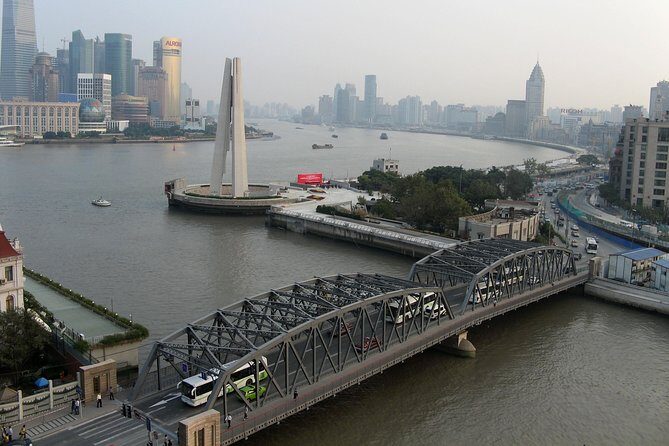
The final highlight is Waibaidu Bridge, also known as the first all-steel bridge and the only surviving example of a camelback truss bridge in China. The present bridge opened on 20 January 1908.
This is a fun capstone because it shifts you from political and colonial history into engineering and design. It’s the kind of structure that looks more impressive once you know what was new about it back then.
Even if you’re not a construction nerd, you’ll likely appreciate the bridge’s visual clarity and how quickly it becomes a photo background you’ll remember on future walks around the area.
Lunch: an authentic dumpling meal that keeps the day from feeling rushed
The tour includes lunch: authentic dumplings. That matters because a guided day can otherwise turn into expensive snack breaks and rushed decision-making.
Dumplings are also a good choice here because you can eat without derailing the pace. You’ll have fuel for the next steps while still keeping the day grounded in everyday local food rather than a “tourist lunch” fallback.
Who this tour suits best
This is a strong fit if you like Shanghai for its layers. It works especially well for:
- Travelers who enjoy architectural details and street-level history
- People interested in how early 20th-century China connects to later national events
- Photographers who want variety in subjects, from mansions to old infrastructure
- Anyone who wants a guided day with admissions and lunch handled
It may be less ideal if you want only famous landmarks with minimal context. There’s enough political history here that you’ll get more out of it if you’re open to understanding the story behind the buildings.
Should you book this tour?
I’d book it if you want more than the standard Shanghai loop. The combination of French Concession architecture, the unusual reuse at 1933 Old Millfun, major history tied to Zhou Enlai, and the engineering story at Waibaidu Bridge makes the day feel like one coherent narrative.
Also, check the timing: it’s commonly booked about 32 days in advance, so planning ahead helps you lock in your preferred day. If you’re the type who likes guides who can explain details clearly and help with photos, you may especially enjoy a guide like Peggy, who’s noted for strong English and photo help.
One practical reason to give it a try: with pickup offered, air-conditioned transport, included dumpling lunch, and all fees and taxes, you get a full-day structure at a price that feels workable for what’s included. If your schedule is flexible, you also have the comfort of free cancellation up to 24 hours before the start time.
FAQ
How long is the Shanghai Uncommon Historic Sites Tour?
It lasts about 8 hours.
What time does the tour start?
The tour starts at 9:00 am.
How much does the tour cost?
The price is $175.00 per person.
Is pickup and air-conditioned transportation included?
Pickup is offered, and the tour includes an air-conditioned vehicle.
Is lunch included?
Yes. Lunch is an authentic dumpling lunch.
Are admission tickets included?
Some stops include admission tickets as part of the experience. For example, admission is listed as included for the Shanghai Ancient City Wall and the Site of the Second National Congress of the Communist Party of China, while other stops are listed as free.
Is this tour private?
Yes. Only your group will participate.
Can I cancel for a full refund?
Yes. You can cancel up to 24 hours in advance for a full refund.