REVIEW · SHANGHAI
Private Full Day Tour: Shanghai Colonial History Tour
Book on Viator →Operated by Jennys China Tours · Bookable on Viator
Colonial Shanghai makes more sense in one day. This private tour walks you through how foreign concessions shaped the city from the 1800s to today, using street-level stops you can actually picture. You’ll move between classic neighborhoods, themed districts, and the Bund’s landmark architecture—then tie it all together with a guide who keeps the story clear and grounded.
I really like two things here: the architecture-hunting across the Former French Concession and Tian Zi Fang, and the hotel-to-hotel convenience that makes an 8-hour day feel manageable. The dumpling lunch is a smart bonus too, and you can request vegetarian.
One possible drawback: this is a full 8 hours with several 1-hour stops, so if you hate “clock-based” sightseeing or you want lots of extra museum time, you may wish you had more freedom to linger.
In This Review
- Key highlights worth planning for
- How Shanghai’s concession story still shapes your photos
- Hotel pickup, air-conditioning, and a dumpling lunch that fixes your energy
- Former French Concession: where mixed styles explain mixed power
- Tian Zi Fang: Shikumen alleys for street-level history
- Thames Town: Shanghai’s British-themed experiment, 30 km out
- The Bund (Wai Tan): consulates and banks along the Huangpu River
- Shanghai Municipal Archives: the administrative side of the concession era
- What the guides add: flexible, friendly, and story-first
- Value check: is $175 per person a good deal?
- Who this tour fits best (and who might want a different plan)
- Quick practical tips before you go
- Should you book this Shanghai Colonial History tour?
- FAQ
- How long is the Shanghai Colonial History Tour?
- Is this tour private?
- Do you get hotel pickup and dropoff?
- What’s included with lunch?
- Are admission tickets included?
- What about transportation during the day?
- How do I get the tickets?
- Is the tour suitable for most travelers?
- When should I book if I’m going during peak time?
- What is the cancellation window?
Key highlights worth planning for
- Private group time with a real guide (only your group participates)
- Former French Concession + Tian Zi Fang on foot for hands-on city atmosphere
- Thames Town’s British-market-town theme as a contrast to Shanghai’s older concessions
- The Bund’s European-built banking skyline along the Huangpu River
- Shanghai Municipal Archives on the Bund for the administrative side of the story
- Dumpling lunch included, vegetarian option available
How Shanghai’s concession story still shapes your photos
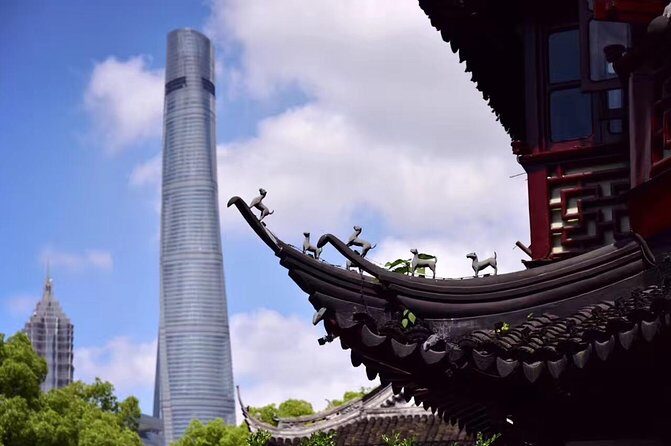
If you only look at Shanghai as a skyline, you’ll miss half the city. The concessions—English, French, American—weren’t just “interesting old areas.” They set up rules, buildings, and institutions that kept echoing long after the foreign presence changed.
What I like about this tour is how it treats the past like something you can see. You’re not stuck with a slideshow. You’re watching how neighborhoods are laid out, how styles mix, and how later generations repurposed the spaces. Then you cap it with the Bund and Shanghai Municipal Archives, where the paperwork side of history lives.
Other private city tours we've reviewed in Shanghai


Hotel pickup, air-conditioning, and a dumpling lunch that fixes your energy
This is built for comfort and time. You get hotel pickup and dropoff, plus an air-conditioned vehicle when you’re moving between areas. That matters in Shanghai, where weather can go from fine to sweaty fast, and you don’t want to waste your day waiting around.
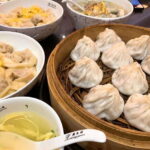
Lunch is included, and it’s described as an authentic dumpling meal—with a vegetarian option. This is one of those “small” inclusions that actually makes the day better, because you’re not hunting for food between stops.
The day runs about 8 hours, and each main stop is around an hour. That pace is ideal for first-timers who want orientation without turning the day into a race. If you’re the type who loves lingering, you can still slow down slightly at the edges, but the route is designed to keep things moving.
Former French Concession: where mixed styles explain mixed power
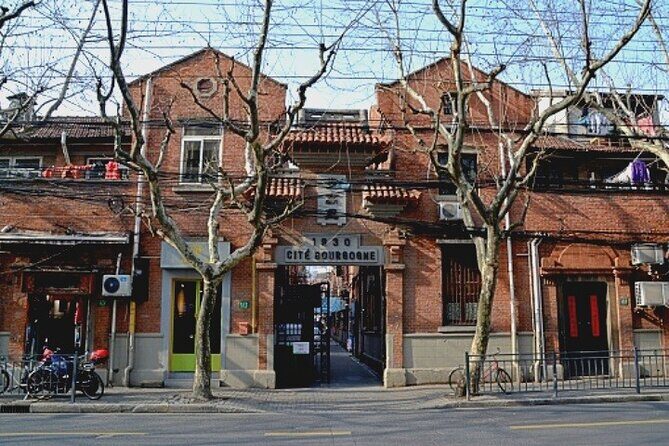
Your first big stop is the Former French Concession, a neighborhood tied to the period when colonial powers had serious influence in Shanghai. Even when you’re just walking, you can feel the “east meets west” vibe people talk about.
This area is known for distinct architecture, and that’s the key for this stop. Instead of treating buildings like background, the guide helps you read them: what the structures suggest about planning, who likely lived or worked there, and why the streets feel the way they do. You’ll also get time to enjoy the atmosphere—some parts feel classic, some feel newly repurposed by modern coffee shops and casual street life.
A practical tip: wear shoes you can walk in for photos. The sidewalks here invite short stops and turning back for one more angle.
Tian Zi Fang: Shikumen alleys for street-level history
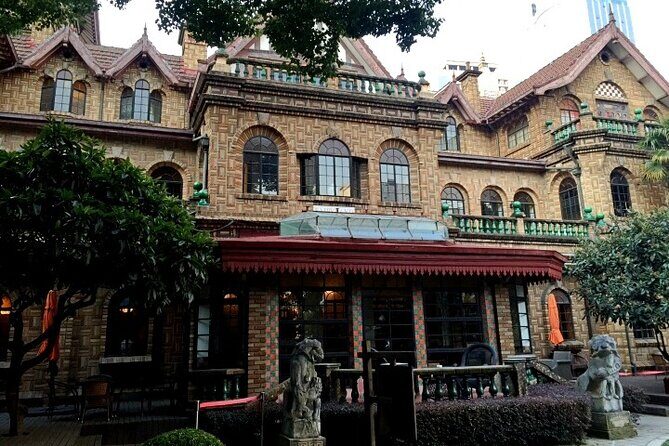
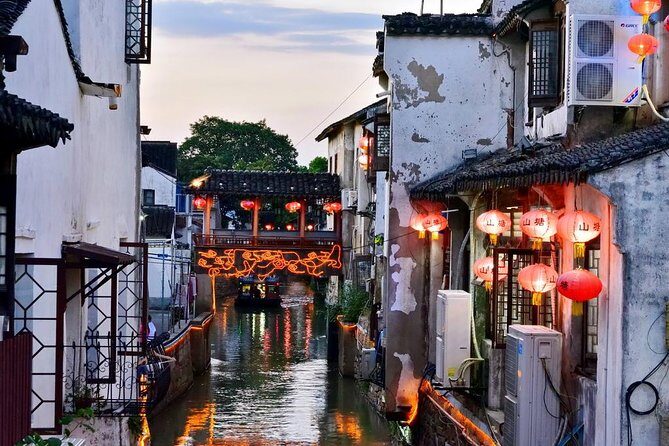
Next comes Tian Zi Fang, a maze of small walkways packed with coffee bars, shops, and restaurants. This is where the tour gets more “human.” You’re not just seeing architecture; you’re seeing how people actually move through the spaces today.
Tian Zi Fang is closely linked with Shikumen architecture—a style you can recognize by its enclosed, alley-like layout. It’s a great contrast to the broader “concession” story because it shows adaptation at a neighborhood scale: how older structures and courtyard-like patterns keep influencing what the streets feel like.
This stop also rewards a specific mindset: don’t rush to the next photo. Slow down for a minute at a junction, look down an alley, and notice how the layout shapes where people gather. It’s the kind of place where the best moments are the ones you didn’t plan.
One consideration: because it’s full of shops and foot traffic, you may want to plan your energy if you’re sensitive to crowds. Still, the time frame (about an hour) keeps it from feeling endless.
Thames Town: Shanghai’s British-themed experiment, 30 km out
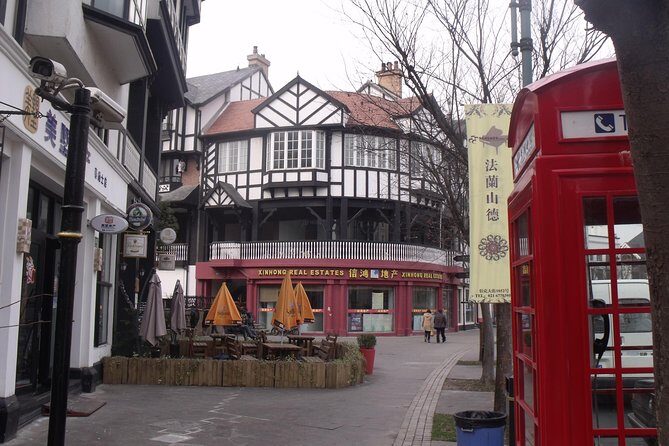
Then you head to Thames Town, located about 30 kilometres from central Shanghai. This is a newer town in Songjiang District, built with architecture themed after classic British market town styles.
Think of this stop as a contrast lens. The concessions represent foreign control and infrastructure during a specific era. Thames Town represents a later, more playful version of “foreignness”—a place where the look of Britain is recreated for modern visitors.
Why it’s worth including: it shows how Shanghai understands and repackages international imagery. You’ll be able to compare the feeling of a historically grounded neighborhood (like the Former French Concession) with a designed, themed environment. Even if Thames Town isn’t your favorite stop, the comparison helps you understand the city’s evolving relationship with outside influences.
Practical note: the day schedule includes driving time between areas, so settle in on the ride and treat Thames Town as part of the full-day flow, not a standalone “must-see for hours” destination.
Other private tours in Shanghai



The Bund (Wai Tan): consulates and banks along the Huangpu River
No colonial history tour in Shanghai is complete without the Bund (Wai Tan). This is where you see the skyline that once housed banks, trading houses, and consulates from Europe, Asia, and the United States.
The value here is simple: the Bund makes power visible. These buildings weren’t built at random. They reflect international commerce and the presence of foreign institutions along the riverfront. Even if you know little before you arrive, standing on the Bund gives you that immediate “oh, this is the nerve center” feeling.
You’ll also get the kind of photo opportunities people travel for. But the best use of your hour isn’t just taking photos—it’s looking at details. Watch the facades and think about why they would want to project stability, trust, and authority to the world.
If you’re sensitive to wind along the river, bring a light layer. The Bund can feel cooler even when the city inland is warm.
Shanghai Municipal Archives: the administrative side of the concession era
After the riverfront walk, you go to Shanghai Municipal Archives, housed in a modern facility on the Bund. This is the place for the “how did the city run?” angle.
The archives are described as the main repository for archives in Shanghai, holding almost all archives from the previous foreign settlements, along with records from the republican-era municipal government. That’s important because concessions weren’t just about buildings. They were about systems—permits, governance, documentation, and how decisions got recorded.
If you like history that has names, dates, and process, this stop is a strong match. If you don’t, it can still work because you’re coming in with visual context from the Bund, so what you see feels connected rather than abstract.
Practical note: since the time here is about an hour, go in with a simple goal: understand what kinds of records are held and why that matters for Shanghai’s modern identity.
What the guides add: flexible, friendly, and story-first
The biggest recurring theme is the guide quality. Guides like Peggy, Troy, Cathy, and Céline show up across experiences with the same pattern: strong English, city-level insight, and a friendly way of handling your pace.
Here’s what that means for you on the ground:
- You get a guided story, not a list of facts.
- The guide can adjust to what your group wants—more walking, more photos, more focus on one concession area.
- You feel taken care of during the full day, including making lunch work smoothly and ensuring you don’t feel rushed between stops.
One review experience even highlighted how good the guide was for someone with an 11-hour layover, which tells you the route can work even when you’re working with limited time. Another experience praised how the dumplings (specifically jianbo) were among the best Shanghai food they ate—so if you’re a food-first person, this tour has your back.
Value check: is $175 per person a good deal?
At $175 per person for a private full-day tour, the value comes from three things that add up quickly if you try to DIY:
- Hotel pickup and dropoff (less time arranging transport)
- Air-conditioned vehicle for area-to-area movement
- A guide who connects the dots between concessions, architecture, and modern Shanghai
Add in lunch (dumplings, vegetarian option available) and free admission at the listed stops, and the price starts to look more reasonable. You’re not paying just for sightseeing stops—you’re paying for a structured, time-efficient way to understand what you’re looking at.
It’s also booked, on average, about 48 days in advance, which suggests it’s a popular way to get first-timer orientation or a focused layover plan. If your dates are fixed, book earlier rather than later.
Who this tour fits best (and who might want a different plan)
This is a great match if you:
- want an organized day that makes Shanghai’s colonial past understandable fast
- like walking and architecture but don’t want to guess where to start
- prefer private pacing with a guide who can adjust
You might rethink it if you:
- hate a schedule with multiple 1-hour segments
- want more time inside museums or to roam freely without the route structure
- want a tour focused purely on modern Shanghai (this one is intentionally centered on the concession era and its legacy)
Quick practical tips before you go
- Wear comfortable walking shoes. Tian Zi Fang and the Bund area are easiest when you can stroll.
- Bring a light layer for riverfront wind at the Bund.
- If you’re vegetarian, tell them ahead of time so the dumpling lunch works smoothly.
- Budget for small extras like tips for the guide and driver, since they’re recommended.
Should you book this Shanghai Colonial History tour?
If your goal is to get real context for what you see in Shanghai—especially the architecture and the riverfront—you should strongly consider booking. The combination of Former French Concession, Tian Zi Fang, the Bund, and Shanghai Municipal Archives gives you both street-level atmosphere and the administrative side that explains how the city functioned.
On the flip side, if you’re the type who wants total freedom or you want to spend most of your day in a single museum setting, this route may feel a bit tight. But for first-timers, layover travelers, and anyone who wants a guided story that clicks quickly, this is a solid use of a day.
FAQ
How long is the Shanghai Colonial History Tour?
It runs for about 8 hours.
Is this tour private?
Yes. It’s a private tour/activity, and only your group participates.
Do you get hotel pickup and dropoff?
Yes. Pickup is offered at centrally located hotels, and you’re returned after the tour.
What’s included with lunch?
Lunch is included and described as an authentic dumpling meal. A vegetarian option is available.
Are admission tickets included?
Admission is listed as free for the stops in the itinerary.
What about transportation during the day?
You travel in an air-conditioned vehicle, with pickup and dropoff included.
How do I get the tickets?
A mobile ticket is provided.
Is the tour suitable for most travelers?
Most travelers can participate, and service animals are allowed.
When should I book if I’m going during peak time?
On average, it’s booked about 48 days in advance, so planning ahead is wise.
What is the cancellation window?
You can cancel for a full refund up to 24 hours in advance of the experience start time. If you cancel less than 24 hours before, the amount paid will not be refunded.