REVIEW · SHANGHAI
Shanghai: Yuyuan, City God Temple Old City Tour-Tip Based
Book on GetYourGuide →Operated by MeMolaFreeWalkingTour · Bookable on GetYourGuide
Temples, herbs, and alley drama in 2 hours. This small group Yuyuan Old City tour links Taoism, zodiac sights, and classic landmarks near the English live guide you can actually ask questions to.
I love how the route turns sightseeing into understanding: Chinese zodiac animals, what people believe in at the City God Temple, and how those ideas show up in daily folk celebrations. I also like the stop at a traditional medicine shop, where you can sample TCM ingredients (including the king of herbs) and get context for what you’re experiencing.
One possible drawback: it’s built around walking, and it’s not suitable for people with mobility impairments.
In This Review
- Key highlights at a glance
- Yuyuan Old City in 2 hours: why this route works
- Starting near Yuyuan Garden: getting your bearings fast
- Yuyuan Old Street: zodiac animals and story-first sightseeing
- Tonghan Chuntang: seeing traditional medicine beyond the labels
- City God Temple of Shanghai: Taoism and folk religion made clear
- Lake Pavilion Tea House and the bridge views: a calm pause with meaning
- Yuyuan Garden Smallware: local craft and practical souvenir sense
- Finishing at Ancient City Park: a quieter landing
- What you’ll learn (the stuff that sticks)
- The guide factor: Jie’s style (and why it matters)
- Price and value: what $2.36 really means for your money
- Who should book this (and who should skip it)
- Should you book this Yuyuan Old City tour?
- FAQ
- FAQ
- How long is the tour?
- Is there an English-speaking guide?
- How big is the group?
- Where do I meet the guide?
- Which metro lines serve the meeting station?
- What is included in the tour?
- Is smoking allowed during the tour?
- Is the tour suitable for people with mobility impairments?
- What should I wear or bring?
- Can I get a refund if I cancel?
Key highlights at a glance
- Small group size (up to 10) for easier conversation and smoother photo stops
- Taoism and folk religion at the City God Temple explained in plain English
- Chinese zodiac animals with costumes you’ll see as the guide connects them to local beliefs
- Traditional medicine shop sampling, including the king of herbs, for hands-on context
- Scenic pauses around the 9 Zig-Zag Bridge area and Mid-Lake Pavilion viewpoints
Yuyuan Old City in 2 hours: why this route works
Shanghai’s Old City can feel like two different places at once: chaos in the lanes, and calm when you step into temple and garden corners. This tour is short on purpose. In about two hours, you get the main sights around Yuyuan without burning your whole day—or your feet.
The sweet spot here is that the guide keeps you moving, but not just for efficiency. You’re not rushing past everything with a clipboard vibe. Instead, you stop at places long enough to understand what you’re looking at, especially at the City God Temple and the traditional medicine shop.
If you’re the type who likes a plan but still wants room for questions and photos, the small group format makes a difference. You can ask things like why certain symbols show up, what people do during ceremonies, or what the zodiac has to do with the way locals think.
Other Yu Garden and Old City tours we've reviewed in Shanghai
Starting near Yuyuan Garden: getting your bearings fast
You’ll meet at the Yuyuan Garden metro area. The meeting point is listed at 豫园(1号出口)上海市黄浦区 (Yuyuan Garden station Exit 1). It also notes that the metro lines are Line 10/14.
One detail to double-check before you go: the tour’s starting location is also listed as 豫园站3号口. Since both are part of the station complex, the best move is to follow the exact meeting instructions tied to your booking. That way you don’t waste time walking around the station entrances.
Practical tip: wear comfortable shoes. Even though it’s only 2 hours, you’ll be on uneven pedestrian surfaces and you’ll want to pause for photos. And yes, keep your stuff secure—Old City lanes are crowded.
Yuyuan Old Street: zodiac animals and story-first sightseeing
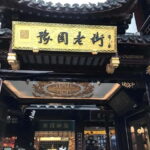
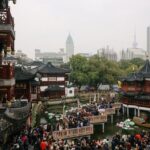
The walk begins at Yuyuan Old Street, where the focus is quick context and clear explanations. This is where you start noticing that the neighborhood isn’t just shops and snacks. It’s also a stage for symbols—especially the Chinese zodiac animals, each with distinct styling that you can spot as you move along.
I like this kind of start because it shapes how you see everything next. Once you understand how zodiac ideas are used in cultural storytelling, you’ll catch details you might otherwise miss—costumes, themed displays, and the way people interact with the area.
The stop is about 30 minutes, which feels right. You get a chance to orient yourself, then you move on before the crowd density gets too intense.
Tonghan Chuntang: seeing traditional medicine beyond the labels
Next up is Tonghan Chuntang (about 20 minutes). This is your traditional medicine shop moment, and it’s one of the most useful parts of the tour if you’ve never encountered TCM as a living tradition.
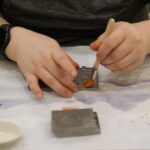
The best part is that you’re not just looking at bottles and jars. You get to connect the idea of herbal medicine to the cultural setting where it’s discussed, prepared, and sold. You even get a sampling of traditional Chinese medicinal herbs, including the king of herbs.
In practical terms, this helps you avoid the common tourist mistake: treating TCM as a mysterious product line instead of a belief-and-practice system tied to health traditions. You’ll still be curious after the tasting, but you’ll also have a clearer framework for what you saw and why people value it.
If you have allergies or dietary restrictions, it’s smart to mention them to your guide before any sampling. The tour data confirms you’ll sample herbs, so plan accordingly.
City God Temple of Shanghai: Taoism and folk religion made clear
The core temple stop is the City God Temple of Shanghai, with about 40 minutes of guided time. This is where the tour really becomes educational—not in a classroom way, but in a walk-and-explain way.
You learn about Taoism and folk religion in China, including common beliefs and celebrations linked to the temple. The guide also helps you interpret what you’re seeing, so the decorations and ritual spaces don’t feel random.
This is also where I’d expect the most questions from you. Temple culture can be loaded with symbolism: who people pray to, what certain rituals mean, and why some parts of temple life have seasonal or festival rhythms. A live English guide makes those moments easier to decode—especially in a small group where you’re not shouting over the crowd.
One note: temples often involve stairs or uneven temple courtyards. The tour isn’t designed for mobility needs, so if you have limited walking ability, this might not fit.
Other city tours we've reviewed in Shanghai




Lake Pavilion Tea House and the bridge views: a calm pause with meaning
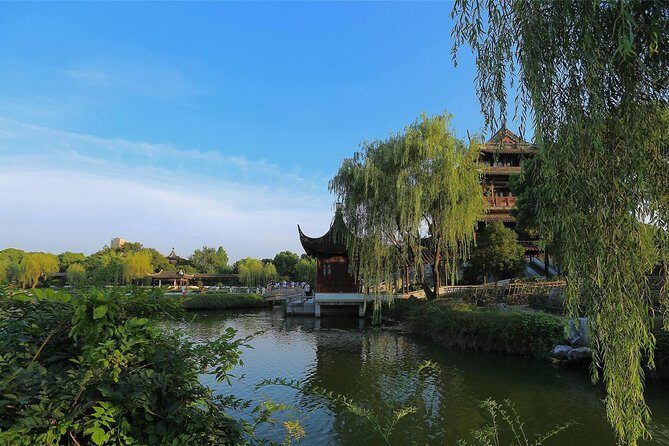
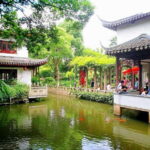
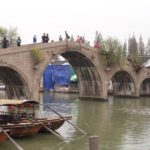
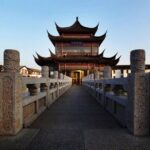
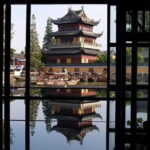
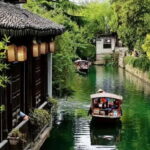
After the temple, you shift to scenery and atmosphere. The tour includes time for views around the 9 Zig-Zag Bridge and the Mid-Lake Pavilion, plus a stop at the Lake Pavilion Tea House (about 20 minutes).
This part matters because it balances the intensity of the religious and market sections. Gardens and pavilion spaces are where you notice the quieter logic of the layout—how water, pathways, and viewpoints guide you through the experience.
Even if you’re not ordering anything specific (the data doesn’t promise a tea service), the setting gives you a breather: you can step back, look across the water, and let the stories from the temple settle in your head.
Also, the guide timing here is smart. You get a scenic pause while you’re still fresh enough to enjoy it, then you continue toward the next cultural stop.
Yuyuan Garden Smallware: local craft and practical souvenir sense
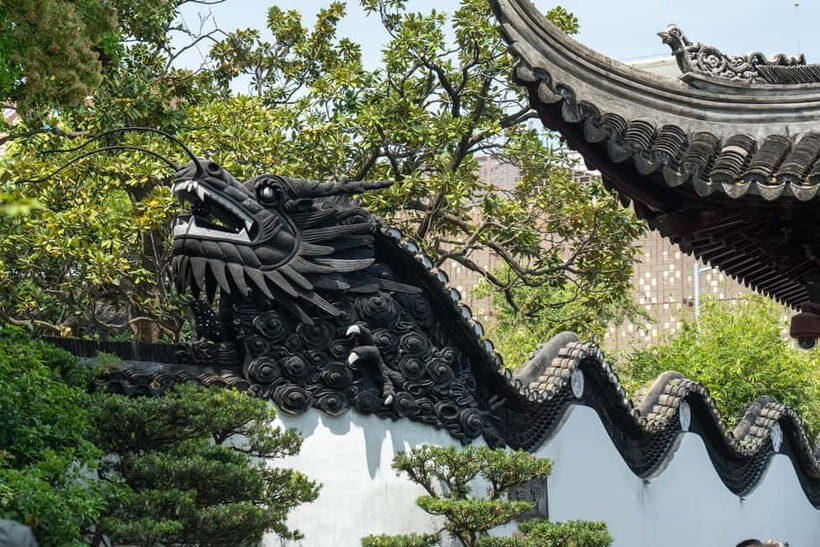
Then comes Yuyuan Garden Smallware (about 20 minutes). This is a shopping-and-craft moment, but the point isn’t to push buys. It’s to help you understand the products in context—what kind of local craftsmanship you’re seeing and how small items fit the texture of Old City life.
If you’ve ever wandered a market and felt lost about what’s worth your time, this part helps. A guided approach keeps you from only noticing the loudest stalls. You’ll get a sense for which goods connect to the area’s style and which are more generic.
This is also where the day can turn into personal choice. You might come away with one meaningful item instead of a pile of souvenirs you don’t really need.
Finishing at Ancient City Park: a quieter landing
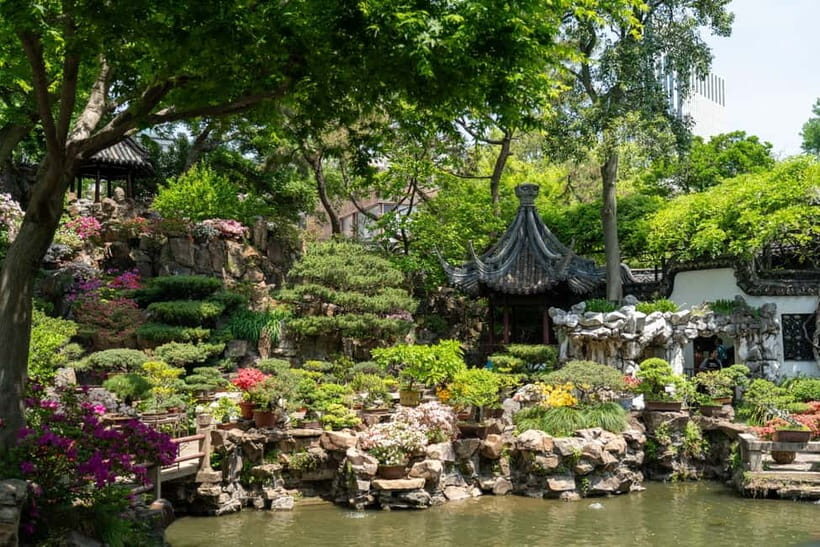
The tour ends at 古城公园 (Ancient City Park). Finishing here feels like a clever pacing move. After the temple and street energy, a park finish gives you space to cool down and walk off without pressure.
The park setting also lets you keep that time-travel feeling going. The tour includes a theme of seeing how living spaces transition over time, and ending in a peaceful environment helps that message land in your body, not just in your head.
If you still have energy after the tour, this is a good place to slow down, take a final look around, and decide whether you want to keep exploring on your own.
What you’ll learn (the stuff that sticks)
This tour’s education doesn’t come as a lecture. It comes as short explanations matched to what you can see right now. Here are the specific themes I’d expect you to walk away with:
- How Taoism and folk religion show up in the City God Temple experience, including common beliefs and celebrations tied to it
- How the Chinese zodiac is presented visually, with costume-based animal themes you can recognize in the Old City area
- A clearer picture of traditional Chinese medicinal herbs, including a sampling experience and what the guide frames as meaningful
- What key landmarks mean in the geography of Yuyuan, from bridge views to pavilion spaces
The guide’s ability to answer questions is a big deal here. In particular, the English delivery is praised as strong and easy to follow, and the tour vibe is described as friendly and fun—with laughs built into the experience.
The guide factor: Jie’s style (and why it matters)
One name shows up repeatedly: Jie. People describe her as well prepared, able to answer questions, and able to explain temple culture and traditional medicine in a way that feels clear.
That matters because City God Temple and TCM can be intimidating if you don’t know the basics. You don’t need to read a guidebook cover-to-cover. You just need someone to point out what matters and help you connect symbols to meaning.
Jie’s tour approach also sounds interactive in the best way. Some guests note they even made wishes during the experience, and the zodiac and gods part became more personal because the guide connected it to the stories and meanings behind it.
Price and value: what $2.36 really means for your money
The listed price is $2.36 per person. That’s extremely low for a 2-hour guided tour in English, so don’t assume it’s the full story of what you’re paying for.
The tour is tip-based, so you should treat this as a format where you’re responsible for your guide’s reward at the end. In other words: plan to bring some cash or use whatever tipping method is easiest, so the price feels fair rather than bargain-hunting.
For value, the key point is what you get for your time:
- Multiple guided stops over a concentrated route
- English interpretation throughout
- A small group setting (up to 10 people)
- Landmark photo moments
If you’re spending money anyway on metro rides and snacks, the guide time is the real “buy.” For many visitors, that’s the part that turns a crowded Old City day into an understandable, enjoyable one.
Who should book this (and who should skip it)
This tour is a great fit if you want:
- A short, guided way to understand Yuyuan’s temple and cultural symbolism
- An English-speaking guide who can answer questions, not just point at sights
- Some hands-on cultural curiosity, like TCM herb sampling
- A small group experience (you’re less likely to get lost in the shuffle)
It might not be ideal if:
- You have mobility impairments, since it’s walking-focused
- You dislike any sampling experiences (the tour includes herbal sampling)
If you’re traveling with kids, the tour could be fun if they enjoy stories and zodiac visuals, but that part depends on the child’s comfort with walking and sampling.
Should you book this Yuyuan Old City tour?
Book it if you want a guided path that makes the City God Temple and the surrounding Old City feel understandable in a short time. The small group, English guide, zodiac explanations, and the traditional medicine stop are the ingredients that make this more than just a look-around.
Skip it if you need step-free access or if you’d rather avoid any tasting/sampling at a traditional medicine shop. And if you hate market crowds, go in expecting a city center vibe—you can still enjoy it, but you’ll want patience.
FAQ
FAQ
How long is the tour?
The tour duration is 2 hours.
Is there an English-speaking guide?
Yes. The tour includes a live tour guide in English.
How big is the group?
It’s a small group limited to 10 participants.
Where do I meet the guide?
The meeting point is listed at Yuyuan Garden station Exit 1 (豫园站1号口), Shanghai Huangpu. The starting location is also listed as 豫园站3号口, so it’s smart to confirm the exact exit tied to your booking.
Which metro lines serve the meeting station?
The tour notes metro Line 10/14 at Yuyuan Garden metro station.
What is included in the tour?
Included items are the 2-hour guided tour through Shanghai’s Ancient City, immersion in history and culture, Taoism and tradition explanation, traditional medicinal herb sampling, travel tips and personalized recommendations, and group photos at landmarks.
Is smoking allowed during the tour?
No. Smoking is not allowed.
Is the tour suitable for people with mobility impairments?
No. It is not suitable for people with mobility impairments.
What should I wear or bring?
Wear comfortable shoes for walking, and keep your personal belongings secure.
Can I get a refund if I cancel?
Yes. Free cancellation is available up to 24 hours in advance for a full refund.