REVIEW · SHANGHAI
Old Shanghai City Walking Tour
Book on Viator →Operated by Shanghai Driver Guide · Bookable on Viator
Shanghai feels different when you walk. This half-day route hits the Huangpu River promenade first, then shifts into old lanes and classic gardens. You’ll pair big-city sights with hands-on stops like a Chinese tea ceremony, plus market time and a finish in Xintiandi.
What I like most is the mix of iconic and lived-in. The Yuyuan Garden stop gives you a real sense of older Shanghai design, and the markets at Yuyuan Old Street feel like the city is doing what it does best: trading stories, snacks, and everyday goods. Also, the tour keeps things social with a small group (up to 12), and the guide-led pacing helps you make sense of what you’re seeing fast.
The one thing to consider is the walking time and the weather. This is about 4 hours on foot, and it runs in all weather, so you’ll want shoes you can handle and a light rain layer if forecasts look iffy.
In This Review
- Key highlights you’ll actually feel during this walk
- Old Shanghai in four hours: a smart first-day orientation
- Bund (Wai Tan): where the skyline and colonial buildings sit side by side
- Yu Garden (Yuyuan): a classic private garden with time to breathe
- Tea ceremony in a traditional teahouse: the break you’ll appreciate
- Yuyuan Old Street markets: birds, crickets, antiques, and everyday street life
- Xintiandi and the Former French Concession shift: old Shanghai gives way
- Pace, group size, and what to wear for this all-weather walk
- Price and value: is $65 fair for what you get?
- Who should book this Old Shanghai walking tour
- Should you book this Old Shanghai City Walking Tour?
- FAQ
- How long is the Old Shanghai City Walking Tour?
- How much does it cost?
- What’s included in the tour price?
- Where do I meet and where does the tour end?
- Is there a group size limit?
- Does the tour run in bad weather?
Key highlights you’ll actually feel during this walk
- Bund at the start of the day: the skyline plus classic colonial facades along the riverfront
- Yuyuan Garden admission included: a full stop in one of China’s finest classical private gardens
- Tea ceremony reset: a traditional teahouse break that’s built into the route
- Yuyuan Old Street market time: birds and crickets, plus an antique market for bargain hunting
- Former French Concession to Xintiandi shift: old Shanghai energy turns into a modern style district
Old Shanghai in four hours: a smart first-day orientation
Shanghai can overwhelm you fast. Even if you love modern architecture, it helps to get your bearings with a route that shows you the city’s “before and after.” This tour is built for that. You start on the Bund, where Shanghai’s older identity is tied to the riverfront, then you move into historic garden space and market streets, and finish in Xintiandi, where the tone is more fashion-forward.
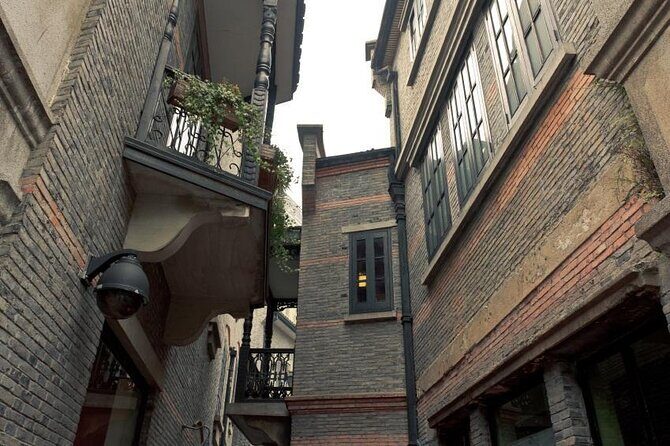
I also like that the tour is not just a photo checklist. It’s structured around “slow enough to notice” stops: the garden, the tea break, and time to browse. That matters because Old Shanghai is visual and layered. If you rush, you’ll miss the small cues—doorways, signage, street textures, and the way people move through the space.
Finally, the format works because it stays group-friendly. With a maximum of 12 travelers, you get an English-speaking local guide who can keep everyone together and answer questions instead of lecturing from far away. Guides such as Mary, Linda, and Tom have been praised for making the experience feel personal and enjoyable, which is exactly what you want on a first introduction.
Other Yu Garden and Old City tours we've reviewed in Shanghai
Bund (Wai Tan): where the skyline and colonial buildings sit side by side
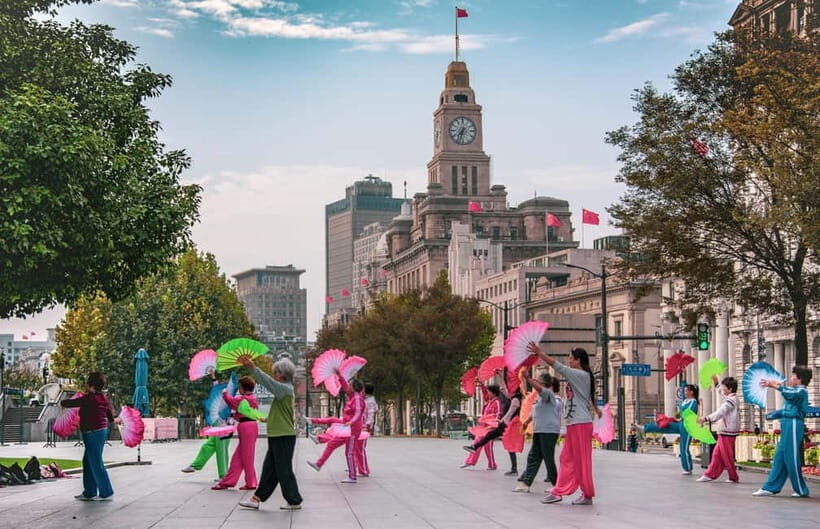
You begin at the Fairmont Peace Hotel on Nanjing Dong Lu (the start point is right in the action of the Bund area). From there, the walk starts along the Huangpu River promenade. This is the part of Shanghai people recognize in seconds—the one that’s been the symbol of the city for years.
You’ll get a clear “old vs. new” contrast here. On one side you have newer financial and commercial skyscrapers. On the other, you see around 100-year-old colonial-style buildings along the waterfront. Even if you’ve only got a short window today, this first stop gives you the framework: Shanghai grew outward and upward, but it didn’t delete the past—it placed it next to the present.
The Bund stop is brief (about 30 minutes), so it’s not a long sightseeing loop. That’s a good thing. You get the visual hit early, then you’re not stuck under the same sky for half the tour. Just make sure your camera battery is happy, because riverfront light can change quickly.
Practical tip: If you’re prone to motion sickness or you hate crowded sidewalks, stay aware in peak areas around the Bund. This start point is central, and you’ll share space with morning foot traffic.
Yu Garden (Yuyuan): a classic private garden with time to breathe
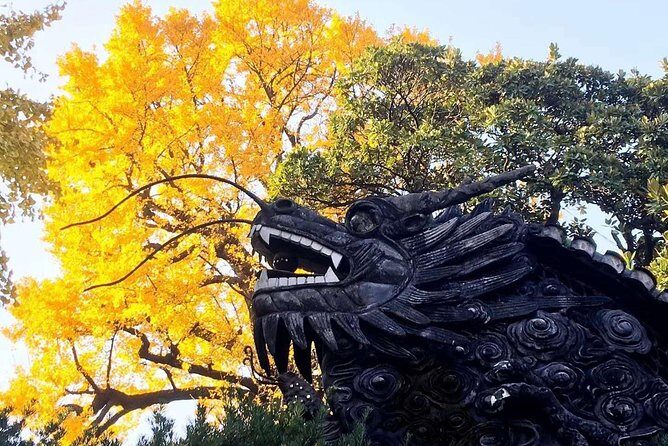
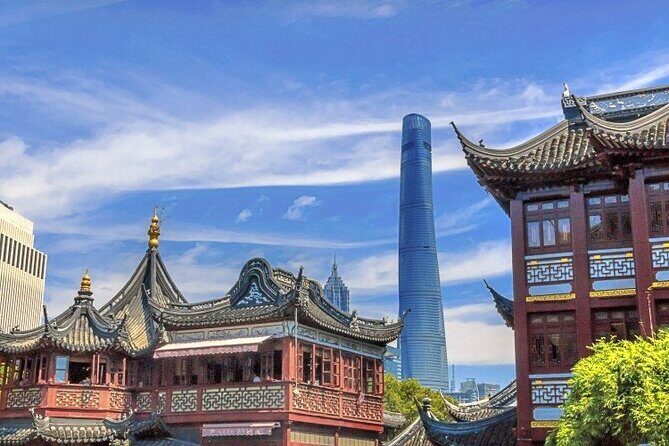
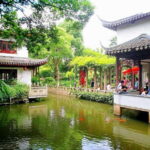
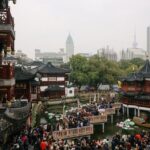
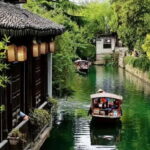
Next you head to Yu Garden (Yuyuan). This is not a quick glance-at-a-garden situation. The visit is about 1 hour, and the tour includes Yuyuan Garden admission. You’ll see why this place is considered one of China’s finest classical private gardens, known for classic garden design and scenery.
A garden like this rewards your attention. You’ll notice that the experience isn’t just “pretty rocks and water.” It’s a designed sequence—paths, views, and framed scenes that make you slow down without anyone telling you to. If you’re coming into Shanghai mainly through modern buildings, this stop gives you a different rhythm: more careful, more human-scaled, and more about atmosphere than scale.
A small drawback: a lot of people want to linger, and 1 hour can feel fast if you’re the type who stops at every corner to read details. The good news is that the tour’s focus stays on helping you interpret what you’re seeing while you have time. Think of it as learning the rules of the garden, then having just enough time to enjoy the game.
If you’re traveling with family or friends, this is the most likely stop to keep everyone happy—adults get context, and the scenery is visually rewarding without needing technical explanations.
Tea ceremony in a traditional teahouse: the break you’ll appreciate
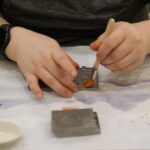
After the garden, you get rest time in a local teahouse and an authentic Chinese tea ceremony experience as part of the stop. Even though it’s listed as a break, it’s also a cultural waypoint. You step away from the walking and crowd noise, and you’re offered a complimentary drink as part of the tour.
The best way to think about this tea stop is as a reset. Shanghai streets can be fast—markets, signage, crowds, and constant movement. The teahouse time gives you a calmer moment so the rest of the route feels clearer, not chaotic.
What you should do: treat it as a moment to slow your brain down. Listen to what the guide explains, ask a simple question if you want (the tour has an English-speaking local guide), and let the experience be more about how it feels than trying to collect facts.
If you’re the kind of traveler who usually skips “included” cultural stops, don’t skip this one. A good tea ceremony in a real teahouse environment changes how you experience the next street scenes. You’ll have better patience for the market browsing after you’ve had a proper breather.
Yuyuan Old Street markets: birds, crickets, antiques, and everyday street life
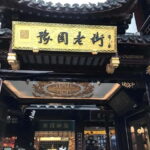
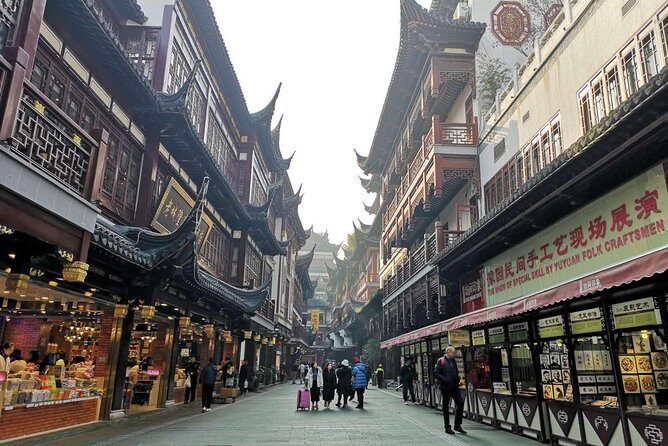
From the garden area, you move into Yuyuan Old Street, with about 1 hour 30 minutes for market time. This is where the tour turns from architecture and tradition into street-level Shanghai.
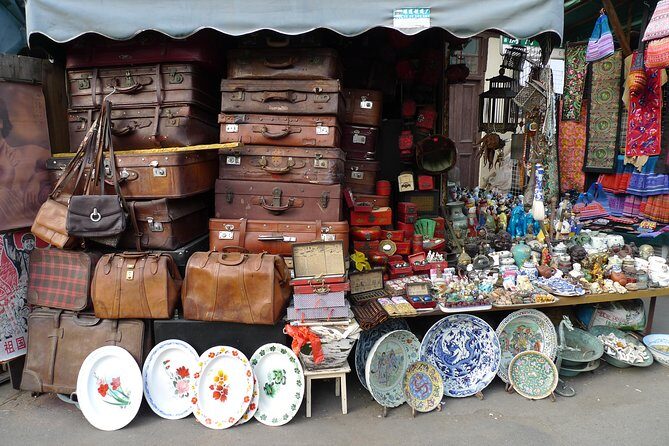
You’ll stop at a market that sells birds and crickets. That alone is a memorable cultural contrast from the modern city skyline you saw at the Bund. Then there’s an antique market where you can rummage for bargain items. The mix is important: it doesn’t feel like a souvenir corridor. It feels like a place where people come to buy, sell, and haggle as part of regular life.
One of the coolest details here is the feeling of street reality. You’ll see lively streets filled with local residents, sometimes still dressed in their pajama-like sleepwear. That’s not staged. It’s the kind of small observation you only catch when you’re moving on foot and staying in the neighborhood long enough.
A consideration: market time can get tiring if you try to do everything. I recommend picking a lane. If antiques are your focus, don’t burn energy on every stall. If you want the bird-and-cricket market vibe, enjoy the sights and smells, take a few photos, and then move on while you still have energy.
Bring small bills if you’re shopping. Even when you don’t plan to buy, having the option makes the browsing less stressful.
Other walking tours we've reviewed in Shanghai



Xintiandi and the Former French Concession shift: old Shanghai gives way
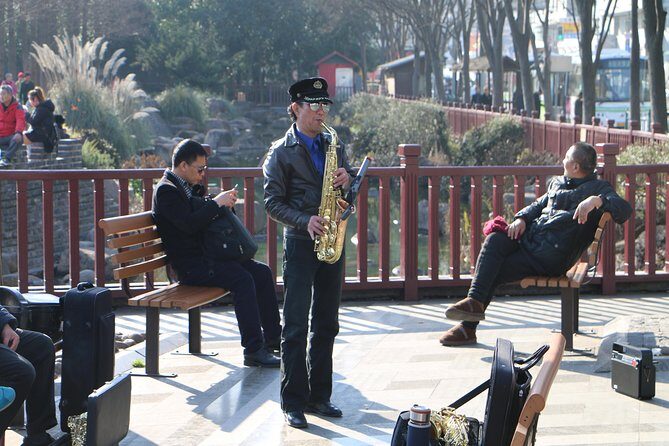
The tour ends with a change in scenery at Xintiandi, tied to the Former French Concession area. You get about 30 minutes here, and that brief stop is plenty to understand the transformation.
Old Shanghai is older, denser, and often quieter in texture. Xintiandi is a different mood—fashionable and modern in feel, crammed with boutique stores, busy pubs and bars, and chic restaurants. In other words, the tour closes the loop: you start at the riverfront symbol, you pass through classic heritage spaces, and you finish where people go to see and be seen.
If you’re hungry, this is a smart place to continue on your own afterward. The timing can work well: you’ve built context earlier, and now you have a stylish district where you can choose your own dinner plan.
One more practical note: the tour ends at Xintiandi station and at/near the Langham Shanghai Xintiandi hotel area (the tour notes the ending point as the hotel at No. 99 Madang Road). That’s convenient for transport, but it also means you’ll want to plan how you’ll get back to your hotel from the Xintiandi area.
Pace, group size, and what to wear for this all-weather walk
This is a 4-hour walking tour and it includes a moderate physical fitness level expectation. That’s consistent with the itinerary: riverfront stroll, garden walking, market browsing, then finishing in a busy district. You’re moving the whole time, but it’s not a “train like an athlete” day.
The group size—up to 12 travelers—is a big deal. It makes the experience feel manageable, and it helps the guide keep you on track without the constant scramble that happens on larger tours.
Weather matters too. The tour operates in all weather conditions, so you need to dress appropriately. If it’s wet, the streets around markets can be slippery, and the riverfront can bring wind. Bring a light jacket, and make sure your shoes have grip.
Also, the tour uses mobile tickets. That’s helpful when you’re juggling sightseeing plans, but it’s still worth saving the ticket screenshot offline in case your phone battery or signal acts up.
Price and value: is $65 fair for what you get?
At $65 per person, this isn’t the cheapest walk in Shanghai, but it is one of the more complete “first introduction” options. Here’s how the value adds up.
You’re paying for:
- an English-speaking local guide
- a complimentary drink
- Yuyuan Garden admission included
- time that’s organized so you don’t waste half a day figuring out how to connect these places
Also, the itinerary is compact in a good way. You get major landmarks (Bund and Xintiandi), a heritage anchor (Yuyuan Garden), a cultural activity (tea ceremony), and market time. That mix is exactly what costs more when done independently, because you’re effectively buying time, structure, and someone who can explain what you’re looking at.
It’s also booked fairly far ahead on average, which suggests demand for a curated old-city overview. If you’re traveling at a peak time, booking sooner tends to make sense.
The main cost risk is your personal pace. If you hate walking and want long free time at each stop, you may find 4 hours restrictive. But if you want a guided overview that still gives you room to browse, the price feels reasonable.
Who should book this Old Shanghai walking tour
This tour is a strong fit if you:
- want a first-day orientation to old Shanghai and how it connects to modern districts
- like guided context but still want time to look around (especially at markets)
- prefer small groups and an English-speaking local guide
- value heritage design and a proper tea break, not just street photos
You might want a different option if you:
- want a longer deep dive into any single area (the garden and markets are each allotted limited time)
- plan to do lots of shopping as a main event and need unlimited browsing time
- dislike walking in mixed weather (because it runs in all conditions)
For most visitors, this works well as the tour that gets you oriented before you pick your own neighborhoods to explore more slowly.
Should you book this Old Shanghai City Walking Tour?
I’d book it if you want a smooth, readable path through old Shanghai that still feels like real life. The Bund to Yuyuan to markets to Xintiandi flow gives you a clear before-and-after story, and the tea ceremony break helps reset your energy so the second half doesn’t feel like sprinting.
If you’re unsure, use this simple rule: if you want structure plus a taste of local street markets, this tour is a good match. If you only want museums or long garden wandering, you might feel constrained by the half-day format.
FAQ
How long is the Old Shanghai City Walking Tour?
It’s about 4 hours.
How much does it cost?
The price is $65.00 per person.
What’s included in the tour price?
You get an English-speaking local guide and a complimentary drink. Yuyuan Garden admission is included.
Where do I meet and where does the tour end?
You meet at the Fairmont Peace Hotel (20 Nan Jing Dong Lu, Waitan, Huang Pu Qu, Shanghai). The tour ends at Xintiandi station and near the Langham Shanghai Xintiandi hotel area (No. 99 Madang Road).
Is there a group size limit?
Yes. The tour has a maximum of 12 travelers.
Does the tour run in bad weather?
It operates in all weather conditions, and you should dress appropriately.
If you want, tell me your hotel area and what time you’ll start exploring Shanghai, and I’ll suggest how to pair this tour with the rest of your day.