REVIEW · SHANGHAI
Hands On Chinese Cave Murals with Local Expert
Book on Viator →Operated by Wenislands Cultural Heritage Preservation Workshop · Bookable on Viator
Copying ancient cave art feels unexpectedly calming. This Shanghai workshop turns Dunhuang mural techniques into a hands-on session where you choose a traditional design and recreate it using authentic materials like mineral pigments and traditional tools, all in a quiet, focused classroom. I especially like the local expert guidance on Dunhuang art and the meditative pace that makes it easier to slow down and concentrate.
Two more things I’m happy about: you’re not just tracing a picture—you work with textures and tools that feel tied to history, and the class format keeps the experience personal (it runs with a maximum of 20 people). The one possible drawback is also real: if you’re hunting for big sightseeing moments in Shanghai, this is a studio-based art class, so your “win” is the artwork and the craft time, not street views.
In This Review
- Key highlights to know before you go
- A calm, hands-on way to meet Chinese mural art in Shanghai
- What you’ll make: Buddhas, Bodhisattvas, and the Nine-colored Deer
- The materials and techniques that make it feel like mural work
- How the 3-hour class typically feels from start to finish
- Why the teacher’s Dunhuang expertise matters (and what it changes)
- Studio calm vs. Shanghai sightseeing: choosing the right kind of day
- Price and value: is $99 reasonable for a mural workshop?
- Practical details that affect your comfort
- Who should book this Dunhuang mural workshop?
- Should you book? My straight answer
- FAQ
- How long is the Hands On Chinese Cave Murals workshop?
- How much does the workshop cost?
- Where does the tour start?
- Is there a mobile ticket?
- What designs can I choose from?
- What materials do you use?
- What’s the group size limit?
- What is the cancellation policy?
- Is the workshop accessible for most people?
Key highlights to know before you go
- Dunhuang-focused instructor with deep expertise in art and culture
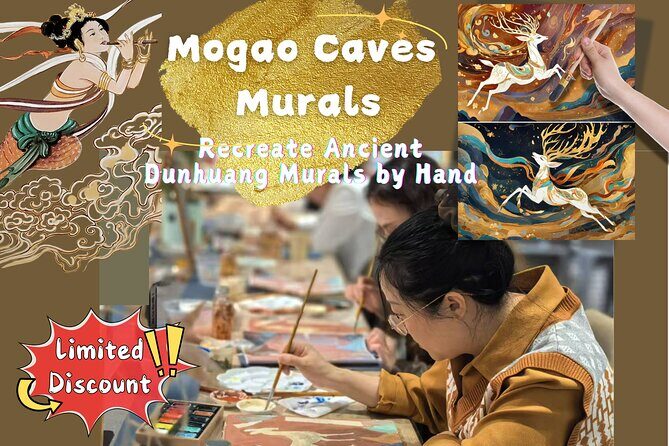
- Choose your subject: Buddhas, Bodhisattvas, and mythical figures like the Nine-colored Deer
- Authentic materials such as mineral pigments and clay boards
- Hands-on methods inspired by older Chinese mural techniques (trace or paint)
- Small-group feel with a maximum of 20 travelers
- You leave with your own finished mural artwork
A calm, hands-on way to meet Chinese mural art in Shanghai
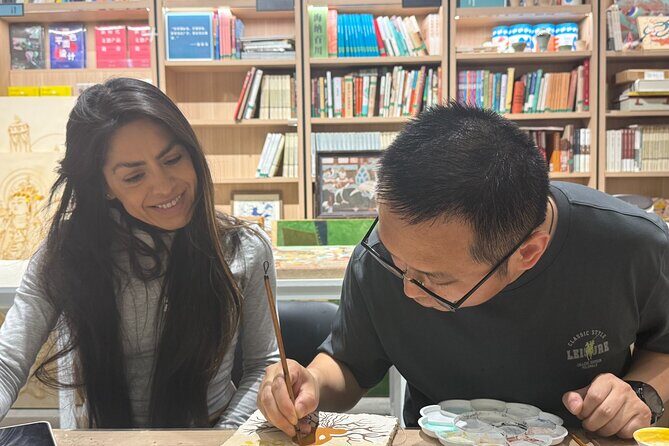
Shanghai can be fast. This experience is the opposite. In a peaceful classroom setting, you work on Chinese cave murals in a way that feels steady and personal, not rushed or performative. The goal isn’t to copy perfectly—it’s to learn the look, texture, and approach behind historic murals.
I like that the workshop is built around an expert who understands Dunhuang mural culture, not just surface decoration. That matters because mural art isn’t only about what you paint—it’s also about why the designs are structured the way they are, and how color and form carry meaning. Even if you’ve never held a traditional brush before, the class is designed to get you creating confidently.
If you're still narrowing it down, here are other tours in Shanghai we've reviewed.


What you’ll make: Buddhas, Bodhisattvas, and the Nine-colored Deer
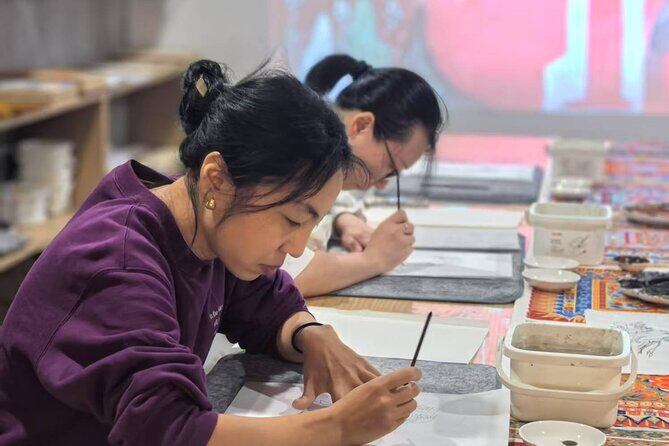
You start by picking from a range of traditional mural patterns. The options include majestic Buddhas, graceful Bodhisattvas, and mythical creatures from ancient Chinese folktales—one example given is the Nine-colored Deer. That variety is more than a menu; it’s a chance to choose a mood.
If you want something spiritual and formal, Buddhas and Bodhisattvas are straightforward choices. If you want a more story-driven, imaginative design, mythical figures like the Nine-colored Deer can feel more playful while still staying rooted in tradition. And because you’re tracing or painting, you’ll spend real time making the chosen pattern your own.
The strongest part of the experience, from the way the class is described, is that you’re not stuck with a single “correct” outcome. You add touches and work with the teacher’s help if you want help shaping colors or refining details. That’s where the workshop feels like a creative session, not a worksheet.
The materials and techniques that make it feel like mural work
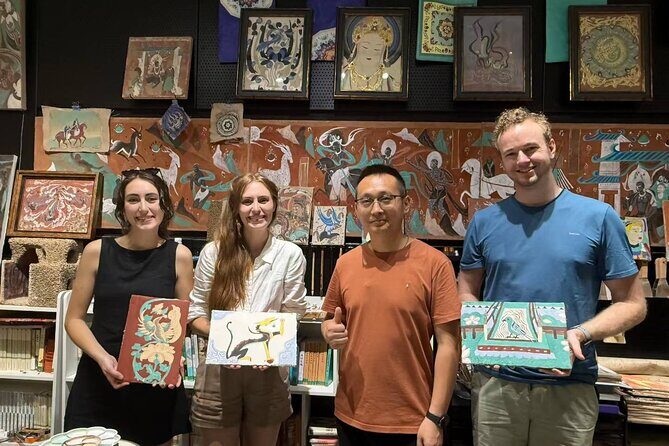
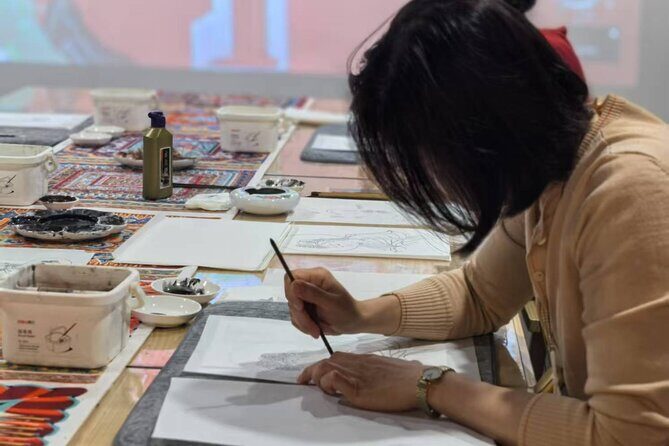
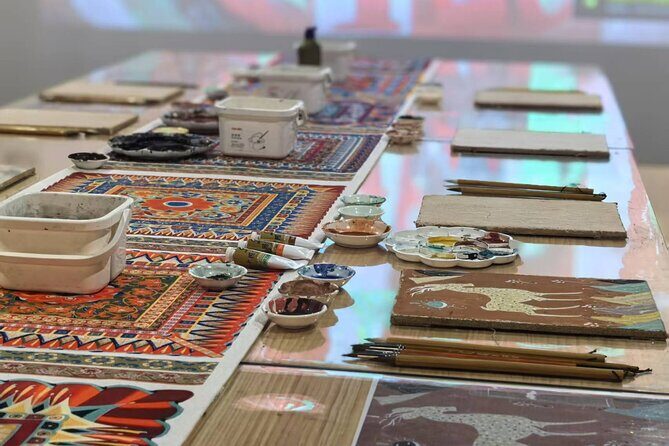
This class doesn’t rely on modern shortcuts. You use authentic-style supplies such as mineral pigments and clay boards, plus traditional tools designed for the look and texture of mural painting. That’s important because mineral pigments behave differently than many off-the-shelf paints you might use at home—so your marks and layers can look more like the historical style.
You’ll recreate historic Dunhuang murals by hand, using techniques inspired by older methods. The workshop format includes tracing or painting, so you can participate even if you’re unsure about drawing skills. If you like texture and tactile crafting, you’ll probably enjoy the physical feel of the materials—clay boards add a different kind of resistance than paper, and brushwork can feel more deliberate.
You should expect a slower, focused process. This isn’t a “paint your name and go” activity. It’s meant to be relaxing and meditative, which is why the studio atmosphere is such a big part of the experience.
How the 3-hour class typically feels from start to finish
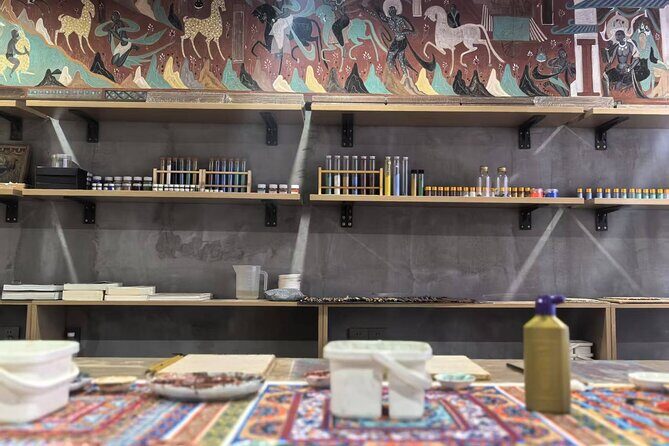
The workshop runs for about 3 hours, and it’s structured to keep you moving without rushing. You’ll start at the meeting point in Shanghai—515 Yi Shan Lu, Xu Hui Qu, Shanghai 200235—and then you’ll spend the main time working at the studio.
In the session, the rhythm is basically: choose a pattern, then recreate it with guided trace-and-paint steps. You’re using traditional tools and pigments, and the teacher helps with practical technique along the way. That guidance is exactly what you want in a craft class like this—if you get color wrong early, it can mess with the look later, so having a knowledgeable person nearby is a real advantage.
By the end, you leave with a finished artwork made by you. That “finished object” matters more than you might think. A lot of classes teach skills but don’t produce something you can take home. Here, the workshop is set up to let you walk away holding the result.
Why the teacher’s Dunhuang expertise matters (and what it changes)
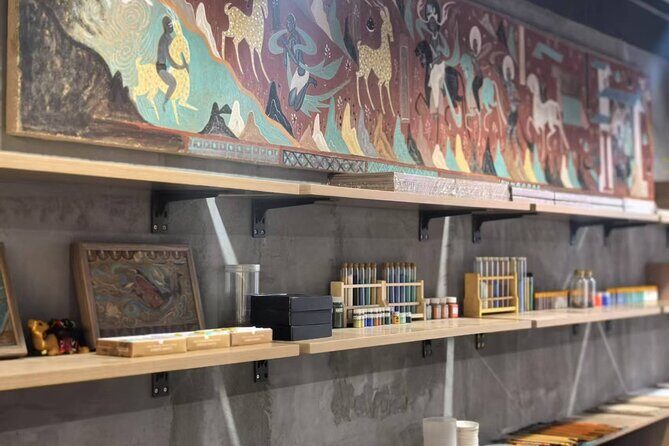
The workshop’s instructor is described as highly knowledgeable, with deep expertise in Dunhuang art and culture. That shows up in what you do with the mural design while you work.
If you’ve ever tried to recreate something traditional without context, you’ve probably noticed how easy it is to get stuck on details and forget the bigger picture. A strong instructor helps you focus on the parts that truly create the mural look: how lines are shaped, how color is balanced, and how the overall design reads from a viewing distance. Even if you’re not going for museum-level accuracy, you get a cleaner result because you’re painting with intention, not guessing.
You’ll also find that patience is part of the experience. Several descriptions point to the teacher being professional and careful with students, including helping with colors and guiding creativity without taking over the whole piece. For beginners, that can make the workshop feel welcoming instead of intimidating.


Studio calm vs. Shanghai sightseeing: choosing the right kind of day
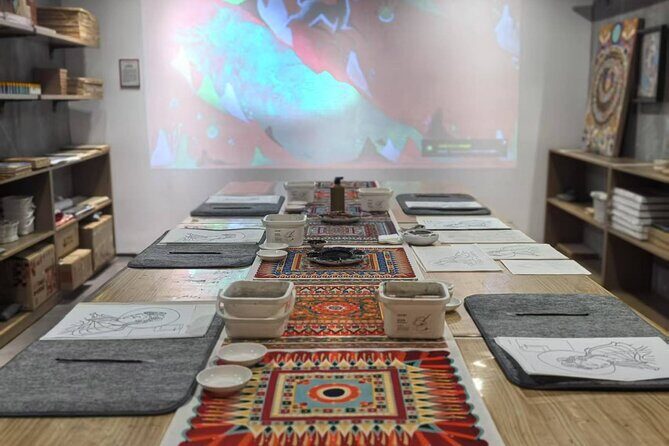
This is a good fit if you want a break from constant walking and crowd noise. The workshop’s quiet classroom setting is part of what makes it special, because it lets you concentrate on fine brushwork and slow crafting.
It’s also a good choice for travelers who like meaningful experiences—people who enjoy learning a craft and taking home something tangible. If your idea of a perfect day is street markets, river views, and big monuments, you might feel like the time is “small” compared to those outings. But if you want a different kind of Shanghai memory—the one you can hold—this delivers.
Consider pairing it with light plans before or after. Since it’s about three hours, you can fit it between other activities without turning the day into a marathon.
Price and value: is $99 reasonable for a mural workshop?
At $99 per person, the price can feel like a lot—until you compare it to what you’re actually getting. You’re paying for expert guidance tied to a specific tradition (Dunhuang murals), plus hands-on use of materials like mineral pigments and clay boards, plus time in a small-group classroom.
Many “creative” tours charge less but often use basic materials and limited instruction. Here, the workshop is explicitly built around traditional supplies and a teacher with deep knowledge of mural culture. For $99, you’re really buying instruction, authentic-style materials, and a finished piece you can take home, not just a quick craft session.
Also, the small-group limit of up to 20 people helps keep it from feeling crowded. That can make the difference between getting one rough hint and getting real help when you hit a tricky part of the design.
Practical details that affect your comfort
The workshop is in Xu Hui District at 515 Yi Shan Lu. The activity uses a mobile ticket, so keep your confirmation accessible on your phone. It’s also near public transportation, which matters because studio classes can be easy to overthink when you’re tired.
Most travelers can participate, and service animals are allowed. The workshop format is designed so people without prior art skills can still join—because tracing and guided steps are part of the plan. Still, if you prefer to stand, move, and explore constantly, you might find the seated, craft-focused time less energetic than an all-day tour.
Who should book this Dunhuang mural workshop?
Book it if you:
- Want hands-on art with authentic-style materials like mineral pigments and clay boards
- Like learning the cultural context behind a craft, not just copying a pattern
- Appreciate a calm, focused setting instead of constant sightseeing
- Want a take-home artwork rather than photos only
- Enjoy small-group experiences where the teacher can help if you get stuck
You might skip it if you:
- Want a high-energy day packed with major Shanghai landmarks
- Don’t care about finished crafts or visual art outcomes
Should you book? My straight answer
Yes, if your idea of a great trip includes slowing down and making something real. This is one of those experiences where the value is in the process: teacher guidance rooted in Dunhuang mural culture, traditional materials you can feel as you work, and a peaceful studio atmosphere that turns “learning” into calm focus.
But if you’re only looking for sightseeing and photo stops, you might find the studio time feels too quiet. For the right traveler, though, this is a memorable Shanghai moment because you leave with an artwork that came from your own hands—made the traditional way, with real craft time behind it.
FAQ
How long is the Hands On Chinese Cave Murals workshop?
It lasts about 3 hours.
How much does the workshop cost?
The price is $99.00 per person.
Where does the tour start?
The meeting point is 515 Yi Shan Lu, Xu Hui Qu, Shang Hai Shi, China, 200235.
Is there a mobile ticket?
Yes, the tour uses a mobile ticket.
What designs can I choose from?
You can choose traditional mural patterns, including majestic Buddhas, graceful Bodhisattvas, and mythical creatures like the Nine-colored Deer.
What materials do you use?
You use authentic materials such as mineral pigments, clay boards, and traditional tools.
What’s the group size limit?
The workshop has a maximum of 20 travelers.
What is the cancellation policy?
You can cancel for a full refund up to 24 hours in advance of the experience start time.
Is the workshop accessible for most people?
Most travelers can participate. Service animals are allowed, and the meeting point is near public transportation.