REVIEW · SHANGHAI
Red Route Tour- Chinese Communist Party
Book on Viator →Operated by UtravelShanghai · Bookable on Viator
Party posters meet luxury storefronts. This Shanghai tour maps the Communist Party story onto real neighborhoods, starting in Xintiandi and ending with a museum stop tied to the Cultural Revolution. The big draw is the historian-style commentary that helps you connect what you’re seeing to key moments in modern Chinese history.
I especially like how the route keeps moving on foot through Shanghai’s layers, rather than turning into a lecture with no scenery. Second, I like the practical add-ons: hotel pickup makes it easier to start on time, and the tour includes free admission at the listed stops, so you’re not stuck hunting for tickets.
One thing to consider: this is a politics-first itinerary. If you’re hoping for a debate-style, off-the-record take on the CCP, this format may feel heavy on the official narrative and on message-driven visuals like propaganda posters.
In This Review
- Key things to know before you book
- Xintiandi as your opening scene: modern Shanghai with political roots
- Stop 1 and Stop 2: the Communist Party’s cradle in the Xintiandi area
- Stop 3: Shanghai Propaganda Poster Art Centre and the Cultural Revolution visuals
- Stop 4: XinTianDi BeiLi—tying the message back to place
- The historian guide: how the commentary shapes what you notice
- Price and value: $85 for 3 hours in Shanghai
- Logistics that actually matter: pickup, movement, and what to pack
- Who should book the Red Route Chinese Communist Party tour?
- Quick FAQ on what’s included
- FAQ
- How long is the tour?
- Is hotel pickup included?
- Are admission tickets required for the stops?
- Does the price include food or drinks?
- Is this a private tour?
- Can I get a full refund if I cancel?
- Final call: should you book this tour?
Key things to know before you book
- Historian guide format that links sites to major milestones in modern Chinese history
- Xintiandi neighborhood base, with walking between stops around the same area
- Cultural Revolution poster museum stop, focused on how ideas were broadcast visually
- Hotel pickup included, so you spend less time figuring out logistics
- Private tour for your group, with only your group participating
Xintiandi as your opening scene: modern Shanghai with political roots
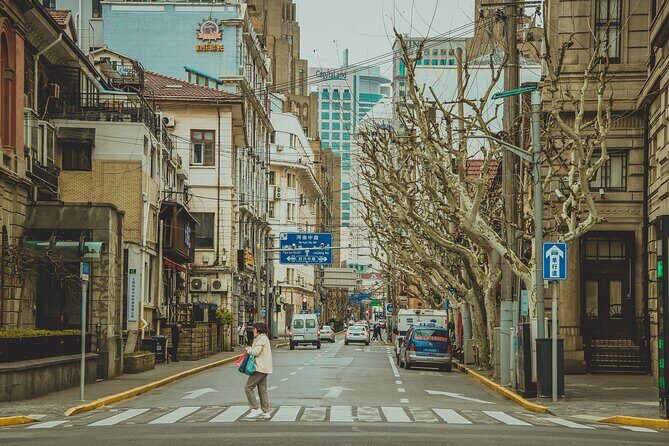
Your tour begins in Xintiandi, one of those places where the city looks polished and international on the surface. That contrast is part of the point. The route gets you from posh restaurants and boutique shopping vibes into the specific area tied to the Communist Party’s early political momentum.
A key detail here is the link to the First National Congress. As you move through the Xintiandi area, you’re not just walking streets—you’re building a mental timeline. I like tours that do this, because the moments you hear about actually have a physical anchor. And when you later see the visuals in the museum, the “why” behind those images clicks faster.
Practical tip: wear shoes you can walk in comfortably. This isn’t a sit-down itinerary, and you’ll spend time on your feet moving between nearby stops.
If you're still narrowing it down, here are other tours in Shanghai we've reviewed.
Stop 1 and Stop 2: the Communist Party’s cradle in the Xintiandi area
From Xintiandi, the tour highlights the Birthplace of the Chinese Communist Party. The pacing matters: you start close to the beginning of the story, then you keep building forward rather than jumping randomly between unrelated landmarks.
What’s useful for you here is the way the guide’s commentary turns the location into context. The sites are close enough that you can compare impressions: modern storefronts and renovated streets, versus the early political beginnings you’re learning about. That creates a clear “then and now” feeling, even if you’re not a total political-history nerd.
Also, the admission for these stops is listed as free. That helps you keep the tour feeling like a walk-and-learn experience rather than a ticket-hunting exercise.
Possible drawback: if you’re expecting big outdoor ruins or dramatic monuments, this is more about meaning than monumental architecture. The value is in what the guide explains while you’re there.
Stop 3: Shanghai Propaganda Poster Art Centre and the Cultural Revolution visuals
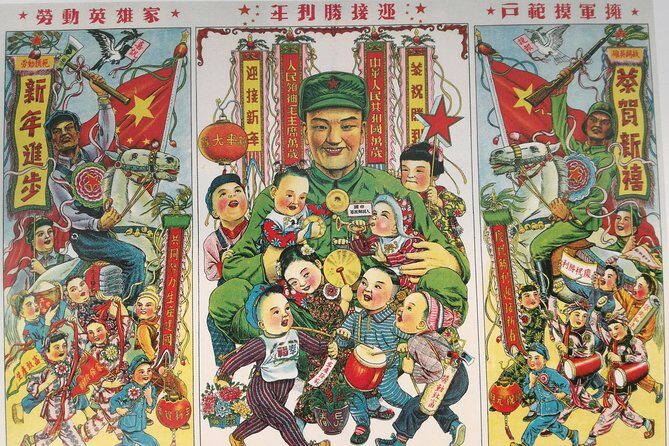
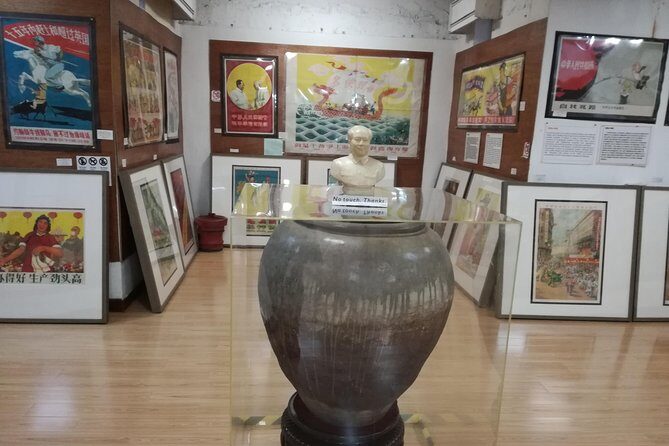
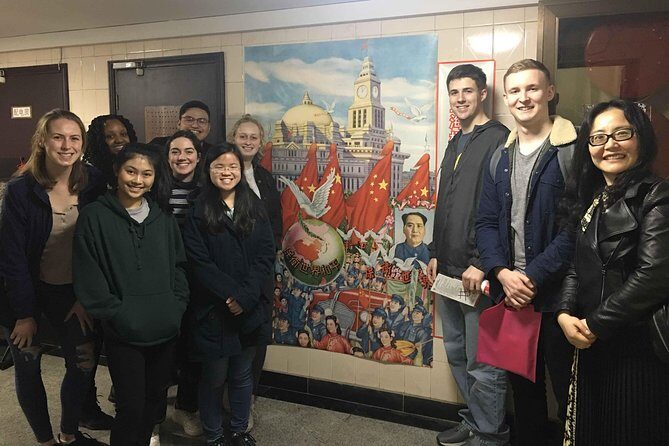
Then comes the museum stop: the Shanghai Propaganda Poster Art Centre. This is the most visually intense part of the experience, centered on materials dating from the Cultural Revolution.
If you’ve never paid attention to propaganda as design—colors, symbols, slogans, how posters tried to shape emotion—this is where you’ll start noticing patterns. Posters are a kind of mass messaging you can study like a primary source. You’ll likely spend more time here than you expect, because there’s a lot to read and interpret, even when you don’t know every reference.
The route also uses a change in transportation to reach this stop, with subway or taxi mentioned as options. That’s a helpful rhythm break after walking. It also means you won’t feel like you’re doing nonstop pavement without a plan.
Practical tip: go in with a calm mindset. Propaganda is meant to persuade. So if you feel a little unsettled by what you’re seeing, that reaction is normal. The tour’s value is that the guide helps you understand what those visuals were doing in their era.
Stop 4: XinTianDi BeiLi—tying the message back to place
After the poster museum, you finish with another Xintiandi-area stop: XinTianDi BeiLi. Even without a huge, separate “big attraction” feel, the point is to bring the story back to the neighborhood fabric that started it all.
This final stretch is useful because it lets you reconnect what you learned to where you’re standing. The tour doesn’t treat the CCP story as something sealed in a museum box. It keeps the thread moving back into Shanghai’s present-day streets.
Why I think this matters: ending near your starting neighborhood helps your sense of orientation. You’re not left wondering where you are in relation to everything else you want to do that day. You’ll also likely be able to grab lunch or keep exploring nearby once the tour ends, since the tour doesn’t include food.
The historian guide: how the commentary shapes what you notice
The experience is led by a professional historian guide, and that changes the whole vibe. Sites and posters can turn into disconnected facts if you don’t have a guide to connect the dots. The tour’s model is to give you commentary that tracks key moments in modern Chinese history as you move from stop to stop.
In the reviews, one guide name comes up often: Penny. The praise isn’t just about having facts. It’s about the guide giving explanations that walk you through the timeline—plus practical suggestions after the tour. I like that mix because you’re not only learning. You’re also leaving with real help for how to continue your day in Shanghai.
What you should do to get the most out of the guide’s talk:
- Ask yourself what question each stop is trying to answer: How did power form? How did messaging spread? How do places change?
- Take notes only on the biggest themes. If you try to write everything, you’ll miss some of the visual details.

Price and value: $85 for 3 hours in Shanghai
At $85 per person for about 3 hours, this tour is priced like a focused half-day experience rather than a full-day sightseeing package. The value improves because several important elements are included:
- Hotel pickup is included, which is one of the biggest time-savers in Shanghai.
- The listed stops show free admission, so you’re not paying extra at the museum portion based on the provided information.
- You get a professional historian guide, which tends to justify the cost more than a general walking tour.
There’s also a practical booking detail: it’s often booked about 34 days in advance on average. That suggests you’ll want to reserve early if you’re traveling in a busy season or on a tight schedule.
One more value angle: the tour is private for your group. That’s not just comfort—it’s also the chance for your group to pace the walk and ask questions without managing a large crowd.
Logistics that actually matter: pickup, movement, and what to pack
This tour is designed to be easy to manage. You’ll be met by your guide and start at your centrally located Shanghai hotel with pickup offered. The stops are walkable in the Xintiandi area, then the itinerary shifts to reach the museum with subway or taxi options mentioned in the overview.
Because food and drinks aren’t included, plan like a smart adult: bring a small snack or plan your next meal soon after the tour. You’ll also want water, especially if you’re sensitive to walking in warm weather.
You don’t need special gear, but you do want comfortable walking shoes, since the tour includes walking through neighborhoods.
Also, confirmation is received at booking time unless you book close to travel (within 5 days), where confirmation comes within 48 hours subject to availability. If you’re a last-minute planner, keep that timing in mind.
Who should book the Red Route Chinese Communist Party tour?
Book this if you fit at least a couple of these:
- You want Chinese Communist Party history explained in a guided, site-based way.
- You enjoy political history that includes visual sources like propaganda posters.
- You want an efficient half-day plan with pickup and a clear route length of around 3 hours.
You might skip it if:
- You’re mostly in Shanghai for food and shopping and don’t want to spend part of your day on ideology-driven content.
- You hate museum-style message displays, even when framed historically.
Quick FAQ on what’s included
FAQ
How long is the tour?
The tour lasts about 3 hours.
Is hotel pickup included?
Yes. Hotel pickup is included for your convenience, and you meet your guide at your centrally located hotel.
Are admission tickets required for the stops?
Admission is listed as free for the stops, and the included list does not mention admission tickets as something you must buy.
Does the price include food or drinks?
No. Food and drinks are not included.
Is this a private tour?
Yes. It’s listed as a private tour/activity, and only your group will participate.
Can I get a full refund if I cancel?
Yes. You can cancel up to 24 hours in advance for a full refund.
Final call: should you book this tour?
I’d book this tour if you want Shanghai history that isn’t just pretty buildings and river views. The combo of Xintiandi locations plus the Cultural Revolution poster museum gives you both place and message, and the historian guide format helps you make sense of the timeline instead of collecting random facts.
Skip it if politics-heavy content will drain your energy, or if you’re looking for a mostly entertainment-driven outing. For the right kind of curious traveler, though, this is a smart use of half a day—especially with hotel pickup and free admissions built in.