REVIEW · SHANGHAI
Zhujiajiao Water Village & Seven Treasure Town Day Tour from Shanghai
Book on Viator →Operated by Hantang International Travel Service · Bookable on Viator
A day trip like this saves you serious planning time. You get two classic Shanghai-area water towns—Seven Treasure Town (Qibao) and Zhujiajiao—plus a hands-on look at silk traditions, all with hotel pickup and drop-off. It’s a straightforward way to see Ming-and-Qing style architecture and how local trades used to work.
I especially like the way the schedule connects themes: textiles and rice wine at Seven Treasure Town, then temples, bridges, and daily life by the water at Zhujiajiao. I also like the boat ride segment, because it turns the towns from just streets and storefronts into something you can actually experience from the river. One drawback to consider: lunch is included, but its quality can be a weak spot, so don’t plan your whole day around it.
In This Review
- Key Things You’ll Really Notice
- Two Water Towns and a Silk Stop Without the Headache
- Qibao / Seven Treasure Town: Textiles, Rice Wine, and a Mill Wedding Hall
- Zhujiajiao: Ming-and-Qing Bridges, Temples, and the Dianpu River Boat Ride
- Lunch Included: Helpful, But Plan Around Possible Quality
- Getting There and Moving Between Stops (Without the Stress)
- Value Check: Is $159 a Good Deal?
- Who This Tour Suits Best
- Should You Book This Seven Treasure Town and Zhujiajiao Tour?
- FAQ
- How long is the Zhujiajiao Water Village and Seven Treasure Town tour?
- What time does the tour start?
- Does the tour include hotel pickup and drop-off?
- Is lunch included?
- Are admission tickets included?
- Is there a boat ride?
- What stops are included in the itinerary?
- How much time is planned at each town?
- Is there a cancellation option?
- Are there mobile tickets and an English-speaking guide?
Key Things You’ll Really Notice
- Seven Treasure Town theme is textiles-first: cloth, yarn, carpentry, and even rice wine
- A wedding hall inside a textile mill adds a modern twist to an old industry
- Zhujiajiao’s Ming/Qing look is preserved and built around old bridges and courtyards
- Dianpu River boat ride gives you a different angle on the residences and willows
- Stop times are tight (about 1.5 hours at each main town), so comfortable shoes matter
- Tour can feel repetitive if you’ve done another water village nearby
Two Water Towns and a Silk Stop Without the Headache
This tour is built for people who want the best-known Shanghai suburb experiences in one day, without messing with buses, tickets, or getting lost in transfers. You’re picked up from your hotel in the city center and moved around in an air-conditioned minivan, which is a big deal in Shanghai’s summer heat.
The big idea here is that you’re not just doing sightseeing. You’re getting two different flavors of the same region: one side is craft and textile trade (Seven Treasure Town), and the other is water-town life and heritage (Zhujiajiao). That makes the day feel connected, even though you’ll be moving between villages.
The pacing is the main thing to watch. You’re looking at about 7 hours total, with roughly 1 hour 30 minutes at each major stop. That’s enough to see key sights and take photos, but not enough to linger for hours in every courtyard or shop.
Other Zhujiajiao Water Town tours we've reviewed in Shanghai

Qibao / Seven Treasure Town: Textiles, Rice Wine, and a Mill Wedding Hall
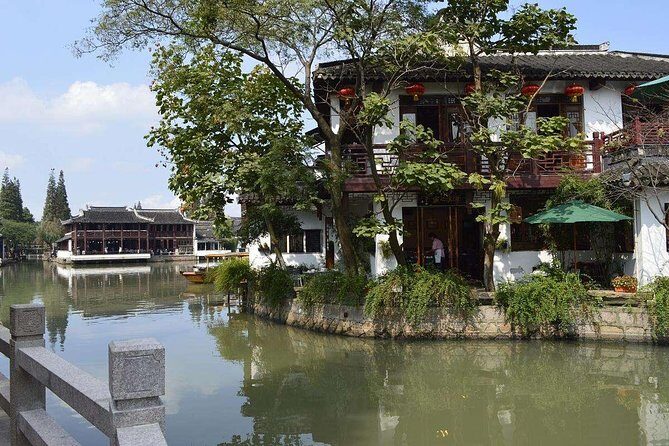
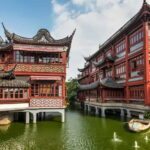
Seven Treasure Town is called Qibao in Chinese, and it earned its reputation during the Ming and Qing dynasties as a prosperous marketplace for textiles. The town’s story is pretty specific: cloth, yarn, carpentry, rice wine—and the trades that made them possible.
When you arrive, expect the focus to be practical, not just decorative. You’ll walk through the town’s highlights and learn how the name became associated with materials people prized far beyond local markets. One fun detail tied to this reputation is that textile samples from the era are referenced as being displayed at the Great Museum of London. That’s a reminder that what looks like a village street is connected to a global craft history.
Here are the stops that usually shape your impression of Seven Treasure Town:
- Textile-mill wedding hall: You can see a unique wedding hall set within the textile mill context, which helps you understand how old industry spaces get reused in modern life.
- Traditional rice wine shop: It’s a small stop, but it anchors the town’s trade beyond textiles.
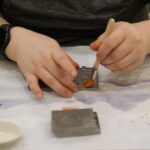
- Hands-on-style trade sights: The day includes other crafts like blacksmithing and bamboo craft, plus fine carpentry.
Also, you’ll likely notice how “historic” can also mean “busy.” Water towns are tourism-friendly, and Seven Treasure Town is no different. What’s worth your time is not just buying souvenirs, but watching how craft-style shops and demonstrations are presented—because that’s where the cultural angle shows up.
Practical tip: this stop is part museum, part market. If you want photos with fewer crowds, aim to move early through the most photographed bridges and front streets, then circle back for shops and details.
Zhujiajiao: Ming-and-Qing Bridges, Temples, and the Dianpu River Boat Ride
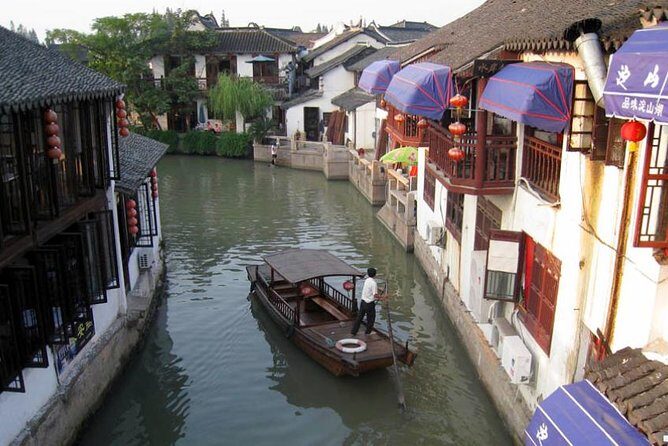
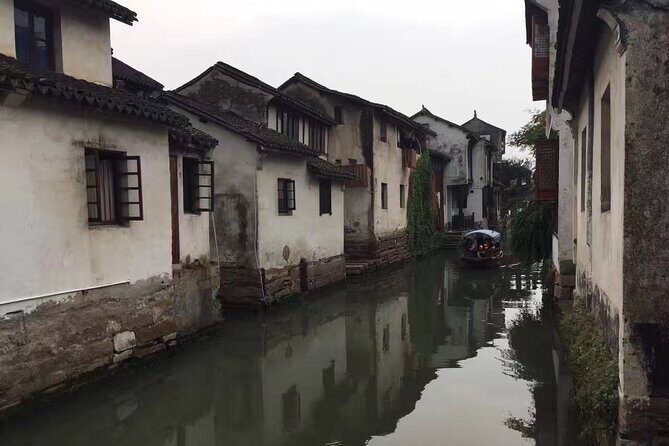
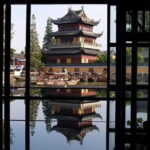
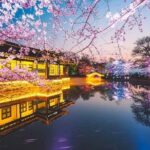
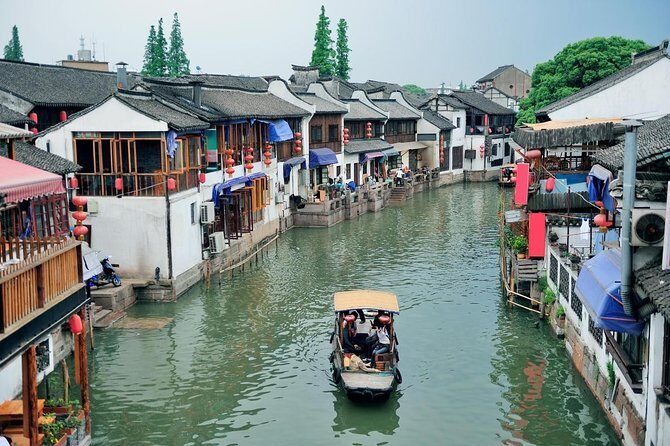
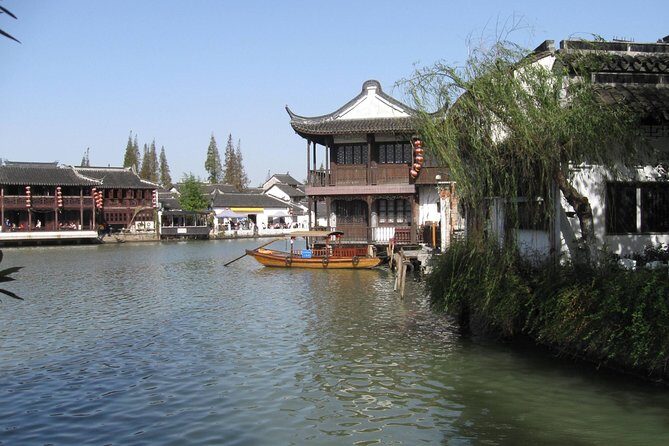
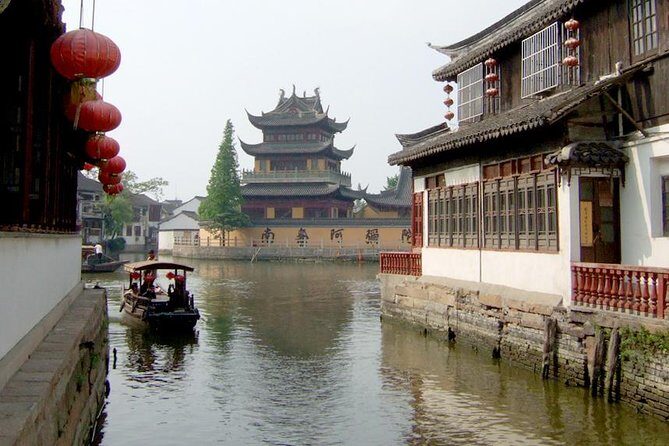
Zhujiajiao is the classic ancient water town story: over 400 years old, set on the Dianpu River, and known for well-preserved Ming and Qing Dynasty architecture. The town layout is built around water routes and canals, so your experience naturally becomes a mix of walking, turning corners, and suddenly seeing another bridge or courtyard you didn’t expect.
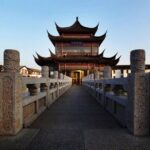
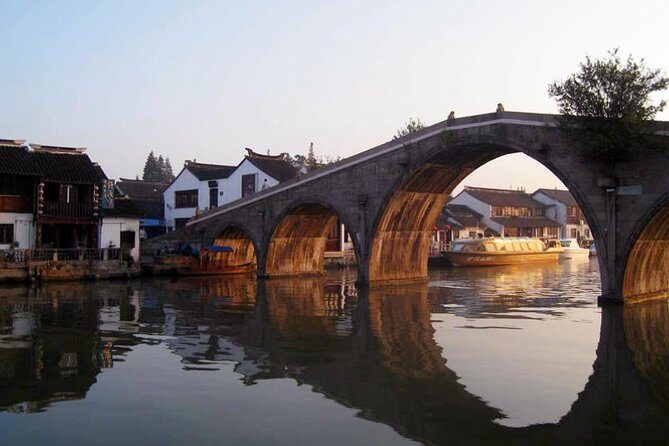
A standout landmark here is the five-arch bridge spanning the Cao Gang River. Even if you’re not a bridge nerd, that structure helps you get your bearings and gives the whole town a stronger sense of place.
Your walk through Zhujiajiao is designed to feel like you’re moving through a maze of paths. You’ll pass ancient bridges, courtyards, and older-looking lanes that still feel tied to everyday life. One of the best parts of Zhujiajiao is the sense of daily rhythm—things like seeing local chores and how people move through the center area.
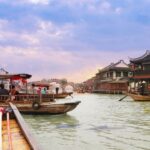
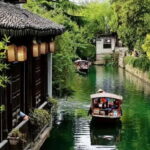
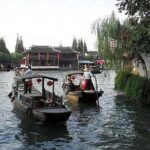
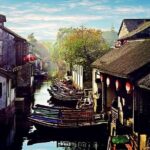
Then comes the part that often makes the day feel worth it: the sightseeing boat ride on the Dianpu River. From the water, the town changes. Instead of only looking at doorways and storefronts, you see the riverfront residences and the way willows gently line the waterway.
The boat ride is not just for photos. It’s the one time during the day when the scale makes sense—how the town was built to live around its waterways.
What about the heritage sites? Zhujiajiao is also home to two impressive temples, and that religious architecture is part of why the town feels more than just a staged waterfront.
One consideration: the pace of the walk can vary depending on your guide’s choices. If your priority is temples and key landmarks, it’s worth staying attentive and making sure you actually hit those areas during the allotted time.
Lunch Included: Helpful, But Plan Around Possible Quality
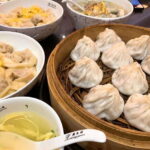
This tour includes lunch, which is a real convenience in a region where timing can get tight. It also means you don’t have to find a restaurant after a few hours of walking and bridges.
Still, lunch can be a weak point on day tours like this. The schedule is built around two main towns, and that often means the meal is more of a functional stop than a standout culinary experience. My advice: eat something light earlier or save room for something simple, and don’t expect a memorable meal to be the highlight of your day.
If you’re picky, bring a water bottle and some small snacks you can grab quickly. That way, if the included lunch runs basic, you’re not stuck hungry or grumpy for the boat ride.
Getting There and Moving Between Stops (Without the Stress)
Hotel pickup and drop-off from the city center is one of the biggest reasons to choose a guided day tour like this. You start at 9:00 am and spend the day on an air-conditioned minivan. In Shanghai, where traffic and timing can swing wildly, that one detail can save you stress.
The tour is listed as having mobile tickets, so you’re not relying on printed documents in the moment. That’s helpful in busy tourist areas.
Group size is another thing to keep in mind. The operator lists a maximum of 999 travelers, which is a theoretical cap rather than what you’ll always see in practice. But it does hint that the day can get crowded during peak hours. The practical takeaway is to be ready for lines or packed bridge moments, especially in the most photographed areas.
Shoes matter more than you’d think. You’ll be walking through old streets, and Zhujiajiao’s layout encourages lots of turns and short stretches. Comfortable footwear helps you enjoy the details instead of counting minutes to rest.
Other Tongli and Zhouzhuang water villages we've reviewed in Shanghai


Value Check: Is $159 a Good Deal?
At $159 per person for a ~7-hour day trip, value comes down to what’s included and how you like to travel.
You’re getting:
- English-speaking tour guide
- Lunch
- Hotel pickup and drop-off in the city center
- Admission tickets
- Boat tour in the water village
- Air-conditioned vehicle
If you were to try to replicate this yourself, you’d likely pay for transportation, tickets, and guided entry without the same “one-day coherence.” The boat ride and included admission tickets are the two pieces that can quietly tip the math in the tour’s favor.
That said, the day is still only 1.5 hours per main stop. If your idea of a perfect water town day is wandering for hours with zero pressure, you might feel rushed. If your idea is “see the highlights, learn the story, then move on,” this tour fits that goal well.
Also, consider redundancy. If you’ve already visited another well-known nearby water village, this day may feel similar. You’ll see bridges, courtyards, and heritage lanes in both towns. The difference is the theme—textiles at Seven Treasure Town, river life and temples at Zhujiajiao—but the overall look can overlap.
Who This Tour Suits Best
This works especially well if you:
- want a high-impact day without planning transit
- like history tied to everyday trades, not just big monuments
- want a boat ride as part of the experience, not as an afterthought
- appreciate walking old-town streets where the architecture does the storytelling
It might not be your best choice if you:
- hate any chance of crowds at scenic bridge areas
- want slow travel and deep time in one town rather than quick hits in two
- are extremely sensitive to lunch quality on group tours
Should You Book This Seven Treasure Town and Zhujiajiao Tour?
If you want an efficient Shanghai-region culture day with two iconic water towns and a river boat ride, I’d say this tour is easy to justify. The biggest strengths are the clear theme at Seven Treasure Town and the more atmospheric water-town experience at Zhujiajiao, especially once you’re on the Dianpu River.
My “book it” checklist:
- You’re okay with about 1.5 hours per main stop
- You want guided admissions and a boat ride included
- You’d enjoy learning how textiles and trade shaped Qibao, then seeing how Zhujiajiao preserves heritage and daily life
My “think twice” checklist:
- You’ve already done a very similar water village and don’t want overlap
- You care a lot about lunch quality (since it can be hit-or-miss on day tours)
- You want every major temple and landmark without any chance of missing a beat, so you’ll need to stay alert during the walk
FAQ
How long is the Zhujiajiao Water Village and Seven Treasure Town tour?
The tour runs about 7 hours.
What time does the tour start?
The start time is 9:00 am.
Does the tour include hotel pickup and drop-off?
Yes. The tour includes pickup and drop-off from the city center.
Is lunch included?
Yes. Lunch is included.
Are admission tickets included?
Yes. Admission tickets are included.
Is there a boat ride?
Yes. There is a sightseeing boat tour in the water village.
What stops are included in the itinerary?
You’ll visit Shanghai Qibao Town (Seven Treasure Town) and Zhujiajiao Ancient Town.
How much time is planned at each town?
Each main stop has about 1 hour 30 minutes.
Is there a cancellation option?
Yes. You can cancel for a full refund up to 24 hours before the experience start time.
Are there mobile tickets and an English-speaking guide?
Yes. You’ll receive a mobile ticket, and the guide is English-speaking.